
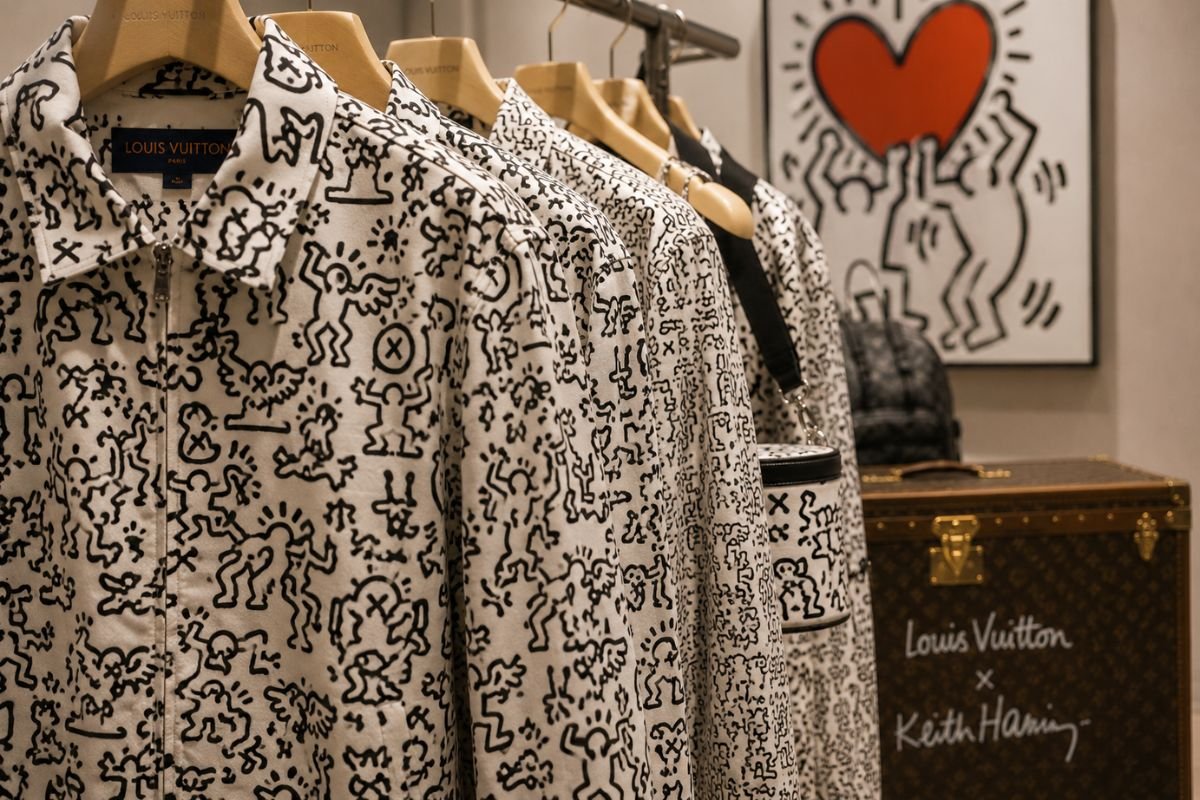
Collaborations between fashion and art became common practice within the luxury industry. However, most brands focused on creating exclusive products featuring artworks from collaborating artists. This made the Louis Vuitton collection different, since Haring’s artworks became part of the overall fashion design rather than simply decorative additions.
View this post on Instagram
Moreover, the decision to collaborate with Haring can also be explained through changes within the luxury fashion industry. Contemporary fashion brands actively compete for visibility across social media and fashion platforms. Haring’s artworks are highly recognizable, which provides the brand with another advantage in terms of public attention and visibility.
View this post on Instagram
Why It Makes Sense to Collaborate With Haring Now
Traditionally, luxury fashion brands attempted to preserve exclusivity by maintaining distance from mass consumption and mainstream visibility. Nowadays, visibility itself has become one of the elements of exclusivity in luxury fashion.
Louis Vuitton managed to combine archival elements of the brand with broader cultural recognition. Haring’s artworks originally emerged from New York City’s public cultural scene, and presenting them within a luxury runway created an interesting contrast for fashion audiences.
It is also important to mention that Louis Vuitton already had a history of collaborations with artists. Previously, the house worked with Takashi Murakami and Jeff Koons. Nevertheless, the choice of Haring also reflects broader shifts inside the luxury industry.
Fashion became increasingly symbolic, meaning that consumers became more interested in collections connected to art, culture, and recognizable visual identities. Collaborations are no longer perceived only as marketing techniques, but also as ways of shaping brand identity.
Brand Identity and Cultural Strategy
The collection also illustrates the direction of Nicolas Ghesquière‘s creative work for Louis Vuitton. Over the years, he balanced futuristic ideas with historical and cultural references.
By integrating Haring’s artworks into the runway presentation, the designer created a connection between the collaboration and New York City culture. Contextualized collaborations often appear more authentic because consumers can associate them with real cultural history.
There was also historical evidence connecting Louis Vuitton with Haring. In 1984, Haring designed a special hand painted trunk for the brand.
This historical connection strengthened the authenticity of the collaboration. In addition, Haring gradually became part of Louis Vuitton’s broader cultural narrative, allowing the collection to function as a combination of two recognizable identities.
Commercial Value of Recognizable Visual Language
Keith Haring’s artworks remained highly recognizable despite being created decades ago. Their strong lines and movement allow them to function effectively across multiple fashion contexts, including leather goods, accessories, fashion campaigns, digital imagery, and social media presentation.
Because Haring’s visual language is immediately identifiable, it becomes especially attractive for luxury fashion brands seeking recognizable visual symbols. Consumers often react quickly to familiar imagery, and Haring’s work naturally attracts attention within modern fashion systems.
Therefore, the commercial logic behind the collaboration becomes relatively clear. Fashion brands often choose established artists instead of emerging talents because recognizable cultural figures already possess global visibility.
Modern Collaborations Are No Longer About Limited Products
Another important aspect of the Haring collaboration with Louis Vuitton is related to the broader transformation of fashion collaborations themselves.
Previously, collaborations between artists and fashion brands focused mainly on creating limited products featuring unique artwork. Modern collaborations became more complex because they now operate through multiple layers of branding and cultural visibility.
Runway presentations, celebrity involvement, media amplification, collector interest, social media circulation, archival references, and cultural discussion all became part of the collaboration process itself.
Fashion collaborations now function simultaneously as cultural events, branding strategies, and commercial projects, which significantly increases their visibility and influence.