
A brief overview
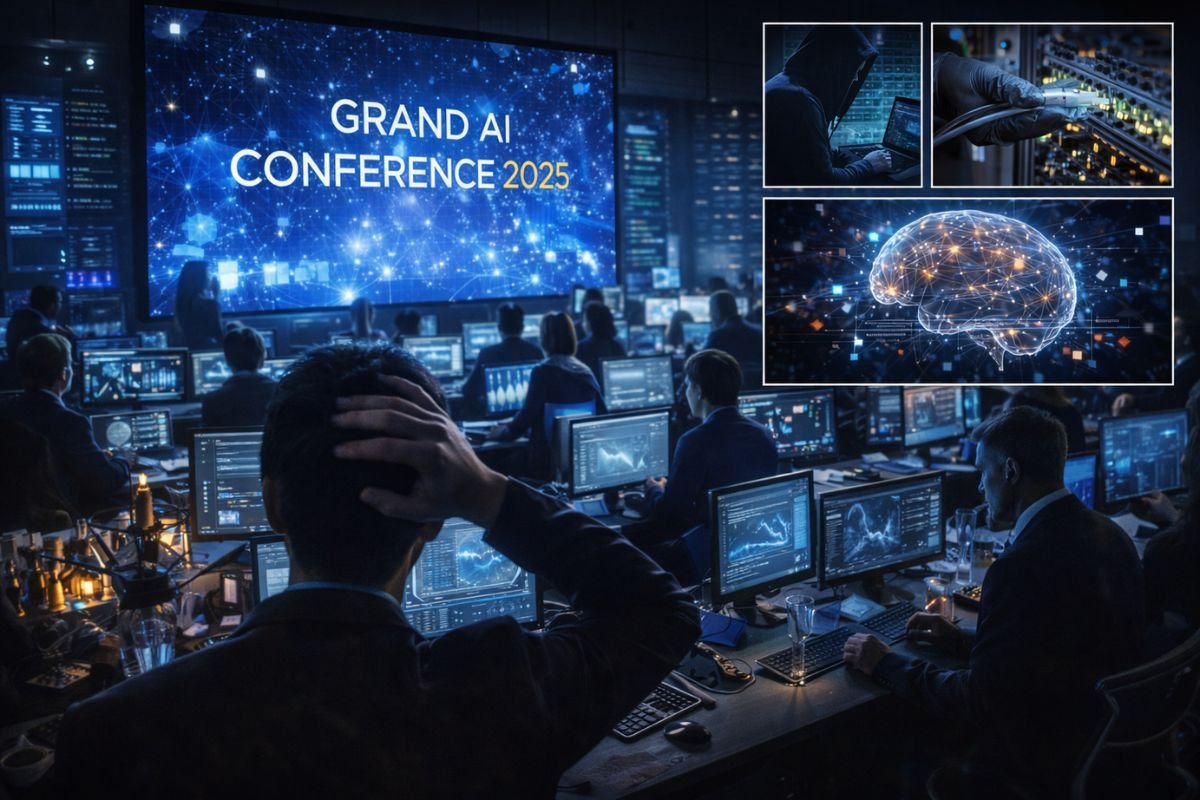
The big AI conference of 2025 was held this year in San Diego, in a dazzling, prestigious version. But the champagne that flowed freely could not conceal the worries that existed. The worries about espionage in the labs became concrete, while the question of whether the economic bubble is about to burst worries everybody.
While the tech giants are pouring billions of dollars into AI and researchers are celebrating on aircraft carriers in San Diego, there is a very different and not very glamorous scenario being painted behind closed doors. “The goal to create an AI that is smarter than humans is very frightening to the people who are creating the AI,” said one AI expert. “The fear of espionage inside the lab is very real, and we are left wondering if we are at the edge of a revolution or just inside an economic bubble,” said another.
Whereas it once started with an academic conference that only allowed scientists to attend, it has now evolved, by December 2025, into an extravagant showcase of power and riches. With an attendance count that broke the 24,000 mark, the AI conference in San Diego has now become the most important gathering in town where the direction of technological progress is set. However, while young scientists were treated to their fair share of high-class cocktails at rooftop hotel bars, the private discussions were anything but rosy.
The Race for Superintelligence – AI Technology Risks
The central idea of the debate is the concept of “super intelligence,” which refers to an AI system that is more intelligent than the human brain. The experts are no longer questioning whether this is going to occur but who is going to achieve it first. This also means that the AI system will be able to learn on its own, debug its own code, and solve problems without human assistance. However, alongside the enthusiasm for AI technology, there is also fear about whether the AI is indeed “thinking” or whether we are reaching the limit of technology that will destroy high hopes.
Despite the enormous amount of investment, the sector is feared to be facing challenges in terms of stability. In the last year alone, the giant technology firms have invested more than $100 billion in the sector’s infrastructure, but the startups in the sector have yet to demonstrate profitability. This has been attributed to the disturbing “circular economy,” where the giant firms invest in the startups, and the startups use the money to buy chips and cloud services from the same tech giants, a pattern also emerging in the AI race between tech billionaires.
“Red Code” and the Fear of Foreign Espionage
The topics of discussion in the recent conference changed from scientific theories to the issue of national security. Experts confessed in a private discussion that the chances of spies being present in the top AI research labs are “very high.” This has become an essential resource, and researchers are now in the crosshairs of global intelligence organizations. Also, the companies that dominated the marketplace before now operate under an internal “red code” because of the surprising rate at which the new competition can fill the gap.
The impact of big money can be felt in the ever-changing character of the labor force as well. Academic scientists lament that the world of business has “swallowed” the academic community. Investment banks on Wall Street have become key organizers of scientific conferences, hoping to recruit genius-level scientists who can give them a competitive edge on the stock market. Young, talented scientists are confronted with the temptation of massive financial rewards, leaving the question: Will there be any scientific research left for the future that isn’t based on the mere idea of turning a quick profit?
A Message of Optimism
The year-end of 2025 marks the zenith of power for the world of AI, as well as the moment when reality kicks in with sobering consequences. The visionaries who shape the future realize that they have moved from being mere scientists to being players in a world of big bucks, politics, and serious ethics. Was the party in San Diego a commemoration of triumph or the eve of the bubble bursting? Only the human ability to outwit the machine that has been built by it holds the answer.