
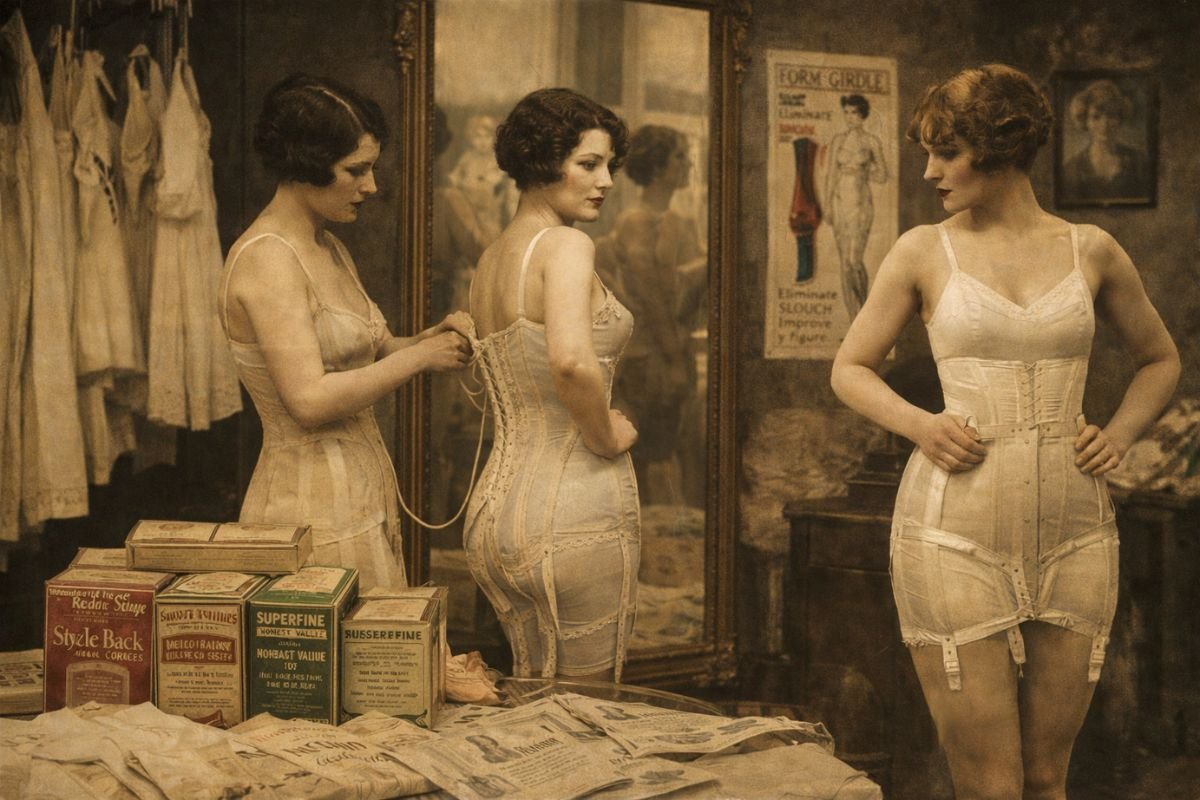
Long before modern shapewear became a quiet staple of wardrobes, fashion had already entered a more complicated relationship with the body. Clothing was no longer just something worn over the figure. It was increasingly something used to manage it, compress it, redirect it, and in some cases, attempt to transform it altogether. The history of body shaping garments reveals a turning point in the 1920s, when fashion, media, and consumer culture aligned around a powerful and modern idea: the body itself could be “improved” through products.
In the decades before, the corset had already established that the silhouette could be engineered. Yet the corset belonged to an older aesthetic logic, one tied to structured waists and hourglass proportions. The 1920s introduced something different. The fashionable body of the era was slim, youthful, and relatively straight. The boyish silhouette associated with flapper style required not enhancement but reduction. Hips were minimized, bustlines flattened, and curves subdued. This shift did not simply alter dressmaking. It created fertile ground for a new kind of consumer promise.
View this post on Instagram
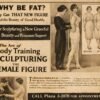
Fashion magazines of the period became spaces where ideals and solutions met. Alongside images of slim silhouettes, readers encountered advertisements for rubber reducing garments, specialized girdles, chin straps, and even full body suits that claimed to melt away excess flesh. These products were often marketed with quasi medical language, suggesting that perspiration, friction, or pressure could quite literally reshape the body. The appeal was modern and urgent. Rather than long term transformation, these garments suggested immediacy. Wear this, sweat, compress, and the body would yield.
This moment marks an early chapter in the history of body shaping garments, not because shaping was new, but because the logic behind it had evolved. The garment was no longer only about posture or structure. It became part of a broader quick fix mentality, one closely tied to consumer culture. The modern woman, surrounded by images of a slender ideal, was invited to purchase not just clothes, but the possibility of aligning her body with fashion’s demands. As body-related language shifted alongside these trends, the body itself became a site of ongoing correction.
At the same time, this development cannot be separated from the broader social context. The 1920s was a decade of rapid change. Women’s roles were shifting, urban life was accelerating, and mass media was expanding. Fashion imagery circulated more widely than ever. The pressure to appear modern, youthful, and streamlined found expression in both visible garments and those hidden beneath them. What was worn under clothing began to matter as much as what appeared on the surface.
Although many of the rubber and reduction devices of the era fell out of favor in the 1930s, the mindset they represented did not disappear. Instead, it evolved. Later decades would see new materials, new technologies, and new language around body management, from foundation garments to contemporary shapewear. The early twentieth century established a lasting pattern. When fashion defines an ideal body, the market responds with tools that promise to bring real bodies closer to that image.
Seen in this light, the history of body shaping garments is not just a story about underwear or construction techniques. It is a story about how fashion culture helped normalize the idea that the body is a project, one that can and should be worked on through products. The 1920s did not invent this impulse, but they gave it a distinctly modern form, one that continues to echo in today’s relationship between clothing, commerce, and the body, a theme explored further in Dr. Jeanne B. Walter’s examination of how beauty became intertwined with medical discourse in fashion culture.