
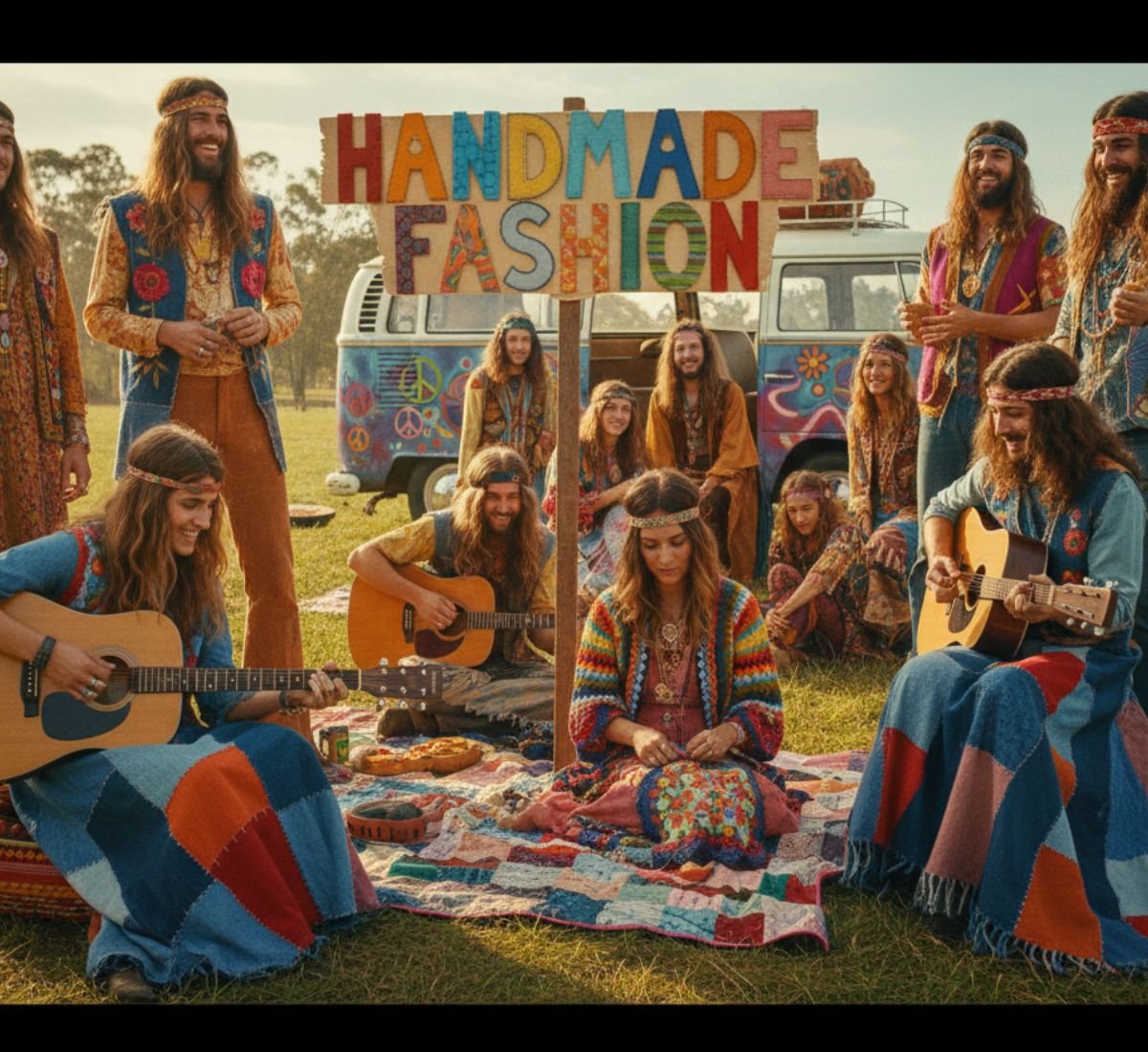
Handmade fashion in the 1960s and 1970s was more than a fashion statement: it was a form of cultural expression shaped through protest, communality, and a strong statement against the increasing pace of mass consumption. With the popularity of counterculture movements sweeping across the United States, hand-made fashion statements began being communicated through a language of identity that was displayed through bold colors, patchwork, embroidery, or tie-dye.
Handmade Clothing in Counterculture Movements
Patchwork dresses, as seen through the creations of Yvonne Porcella, were representative of this ‘handmade revolution.’ Such dresses gave protesters, as well as people in general, a platform through which they could exhibit their dissent as well as their individuality in a manner that did not adhere to the commercial rhythms of fashion at that moment.
View this post on Instagram
Handmade fashion arose as a cultural activity that people shared: they stitched together different materials, shared knowledge, and met in workshops or simply in informal settings. Clothing was thus made with purpose, often using second-hand materials or natural dyes, thus upgrading mere textiles into statements.
Patchwork, Tie-Dye, & the Emergence of DIY Fashion
The do-it-yourself culture was a defining aspect of the counterculture movement in the 1960s and 1970s. Tie-dye tees, crochet tees, embroidered jeans, and appliquéd jackets represented a move away from the neatly cut, mass-market silhouettes of established labels. With every piece being hand-made, every piece was a reflection of its maker, with the result that every piece was unique.
dresses, or ‘patchwork dresses,’ were symbolic in many ways. Indeed, their method of production was a reflection of their value system: unifying diversity, celebrating creativity without any form of stratified structure. It was anti-consumerist, anti-fast fashion, predating this term even.
You May Also Like:
- Building a Plus-Size Wardrobe with Vintage & Retro Style
- The Politics of Fabric: Textile History Across Empires
Handmade Fashion as a Source of Identity
Hand-made clothing was, for many people, a means of cultivating identity outside the expectations of consumer culture. Back-to-the-land communities, feminist craft traditions, as well as music-based communities, celebrated hand-made as a form of empowerment. These pieces of clothing told narratives related to value, experience, and beliefs.
Handmade fashion challenged the idea that fashion requires polish or must be ‘perfect.’ Rather, authenticity was highlighted, something that is being reclaimed in contemporary fashion. At present, patchwork, upcycle, or do-it-yourself fashion is being seen on the catwalk as well as on the street as the industry turns its attention to sustainability.
If this inspires your wardrobe, you can check out our latest fashion selections here!
Why Handmade Fashion Still Matters Today
Although the height of hand-made fashion was within the counterculture movement in the 1960s and 1970s, its principles remain as applicable in modern culture. With modern fashion designers fighting against overproduction and taking steps towards a more sustainable approach, traditional practices associated with the craft movement come back into vogue, echoing the same intentions that shape today’s growing eco-minded silhouettes. Handmade fashion never ceases to remind us that fashion is more than mere material. Handmade fashion is a reflection of identity, purpose, as well as creativity. This legacy carried forward through the decades of the 1960s and 1970s is present in every piece that is hand-stitched, hand-dyed, hand-patched, or hand-embroidered with a vision.