
The conversation around body image has shifted dramatically in recent years, yet the emotional weight carried by many plus-size women continues to be overlooked. A plus-size mental health journey is rarely about the body alone. It begins in the quiet places where old wounds live, where childhood experiences still echo, and where the world’s expectations shape how a woman learns to see herself. For many, healing starts when they realize that changing the body does not automatically change the heart.
View this post on Instagram
Unlearning the Stories That Shape Self-Worth
Many plus-size women spend years believing that their value rises or falls with their weight. That belief does not appear suddenly. It is built slowly, often through small moments in childhood that leave lasting impressions. Research on body image psychology consistently shows that early shame, criticism, or pressure to appear smaller becomes internalized over time. These patterns do not disappear after weight loss or new habits. They stay until they are named, grieved, and released.
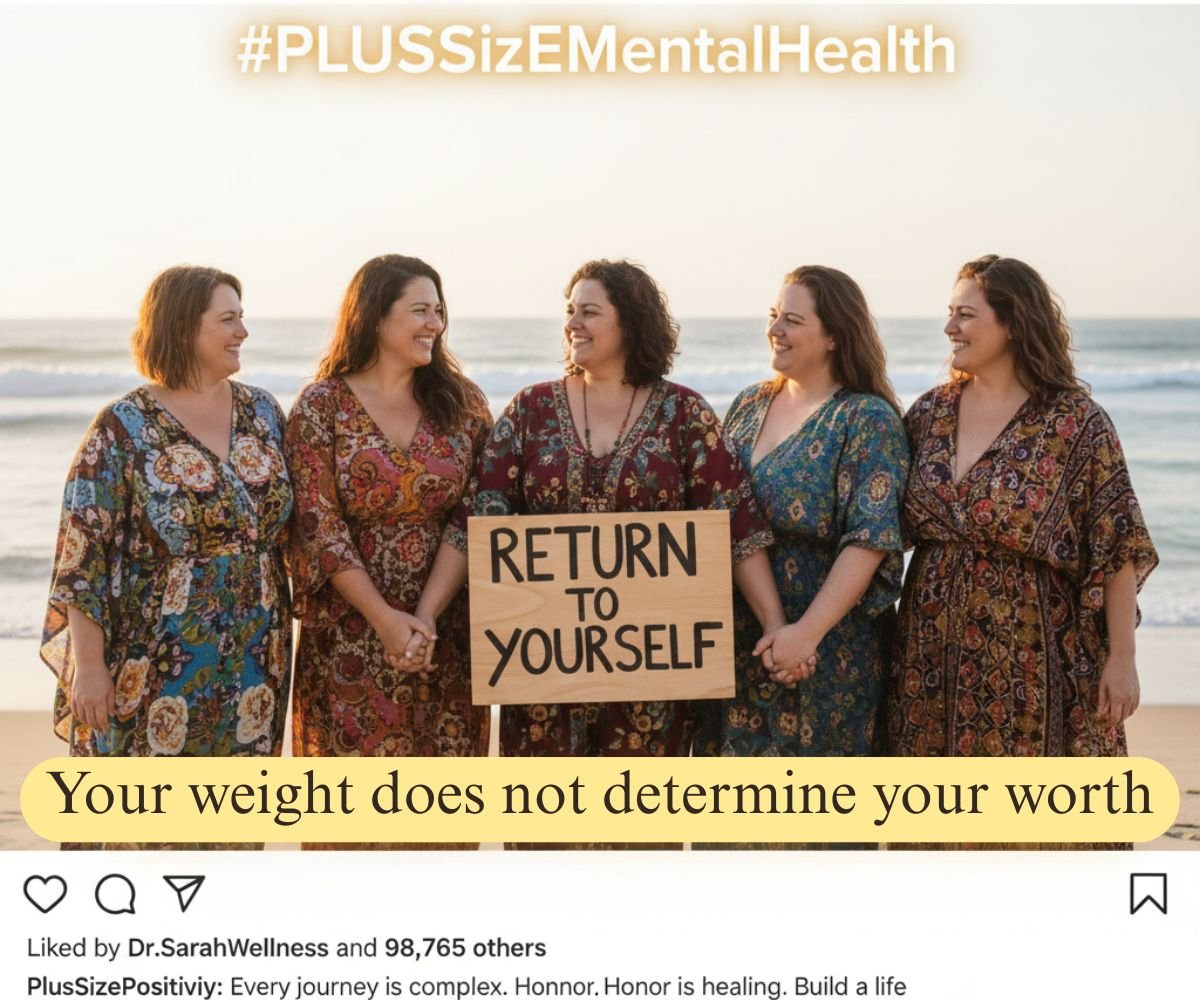
This is where the emotional truth of the Instagram post becomes meaningful. The creator describes how weight loss surgery did not fix her life. Instead, it revealed the old pain she carried, the places where coping strategies quietly shifted from food to people to overworking, all in an effort to feel safe. Her experience reflects something real and well-documented. Emotional healing requires honesty, not just physical transformation.
You May Also Like:
- Christmas Body Positivity Message Inspires Confidence This Holiday Season
- Body Image Legislation Gains Momentum After Bakery Incident
- Iskra Lawrence: Changing the Way We View Fashion and Body Positivity
Healing the Heart Instead of Shrinking the Body
A plus-size mental health journey is deeply personal, but one theme appears again and again. Healing the heart brings more peace than any focus on shrinking the body. Mental health professionals emphasize that emotional healing creates stability, resilience, and self-worth in ways weight loss never can. When the creator speaks about unlearning everything that taught her to hate her plus-size body, she captures a moment that thousands of women recognize in themselves.
Modern conversations around body image show that the shift from self-criticism to self-compassion is one of the strongest predictors of long-term mental well-being. This journey often involves accepting the softness, the curves, the shape that was once treated like a problem. Many women describe this acceptance as a return to themselves, a place where they no longer disappear into old habits or hide their presence to make others comfortable.
Faith, Identity, and the Power of Quiet Healing
Another dimension of this story is one that is both spiritual and emotional. When the creator writes that God met her gently, not to fix her but to remind her she was never broken, she expresses a form of healing rooted in acceptance rather than correction. This message aligns with a broader trend in plus-size communities where faith, identity, and self-worth often intersect. Women who feel pressured by mainstream beauty standards find comfort in reminding themselves that their bodies were never mistakes.
This type of healing is not dependent on size, weight, or appearance. Instead, it comes from releasing past expectations and allowing the present self to exist without apology. It involves grieving the version of yourself that had to be strong, the girl who learned to survive by making herself smaller emotionally or physically. It is a grief many plus-size women know intimately.
Redefining the Future Through Emotional Freedom
A plus-size mental health journey is ultimately about reclaiming the future. When the creator writes that she stopped letting her past choose her future, she names a turning point that can redefine an entire life. Emotional healing invites women to build futures rooted in self-worth rather than self-punishment.
Studies in contemporary psychology emphasize that emotional resilience grows when individuals feel safe in their own bodies. For plus-size women, this means recognizing that their bodies are not obstacles but homes. Homes that deserve softness, love, and peace. Homes that remain worthy even when society insists otherwise.
Every plus-size mental health journey is layered, complex, and deeply human. It asks women to confront their history, honor their healing, and build a life that is not shaped by shame. The Instagram post at the heart of this article offers a reminder that healing is not about changing the body. Healing is about returning to yourself. And for many women, that return becomes the most profound transformation of all.
If this topic resonates with you, take time to explore more stories and perspectives. The world of fashion, culture, and personal identity is always evolving, and there is value in understanding how your own journey fits into a larger conversation.