
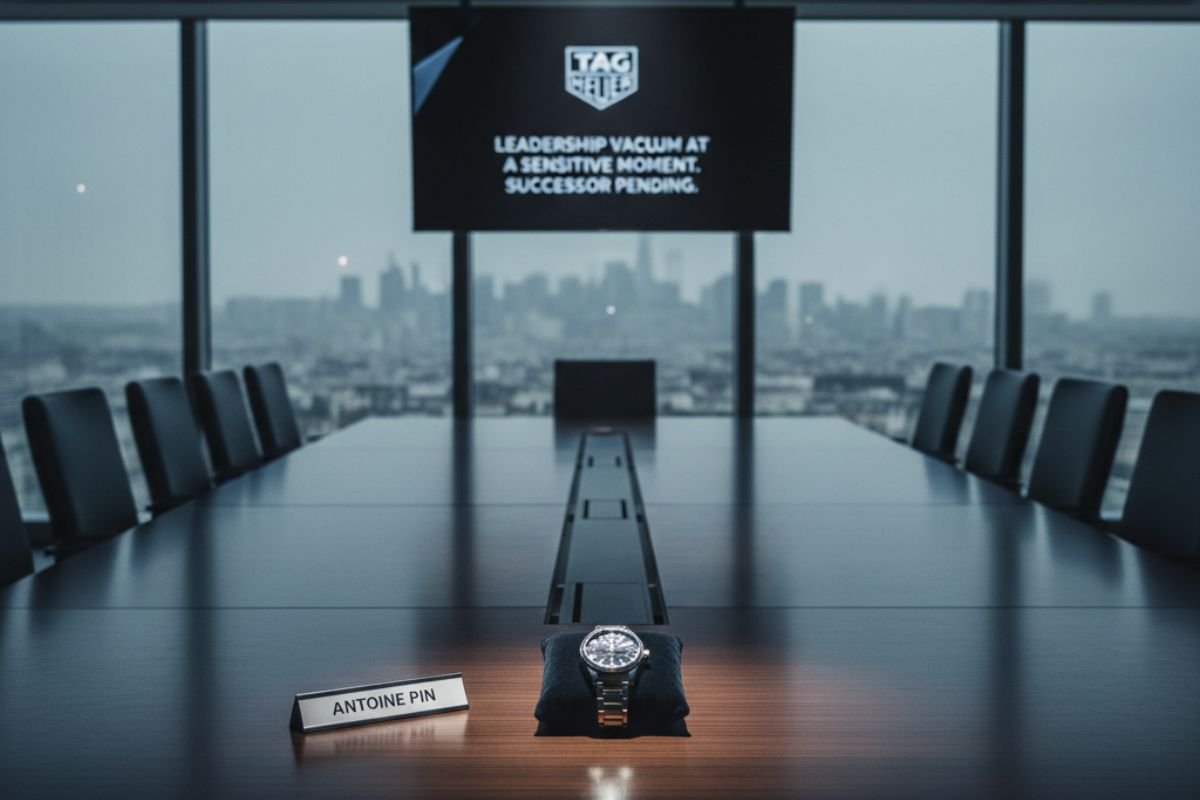
A change of guard at the helm of prominent luxury conglomerates is not always merely an indication of a succession plan being executed smoothly and on schedule. In the case of LVMH, Antoine Pin’s resignation from his position at TAG Heuer is happening at a time when the watch division of this conglomerate is struggling with prevailing market conditions.
LVMH has confirmed that Pin has stepped down after 23 years with the group, bringing a long period of service at one of its most important watch brands to an end. LVMH has said the appointment of Pin’s successor will be made in due course, creating a leadership vacuum at a particularly sensitive moment.
View this post on Instagram
LVMH Watch Division: Challenging Times
The premium watch market has been dealing with uneven demand, especially as spending patterns in the wake of the pandemic begin to level out and demand in major markets cools. Luxury watches remain an important part of their respective cultures, but demand in this space has tempered, making it more challenging for heritage brands to perform consistently.
In this context, leadership continuity has become increasingly important. TAG Heuer, one of the key brands within LVMH’s watch division, has been navigating these conditions while maintaining its position between traditional watchmaking and sports culture.
Why LVMH Watch Division Challenges Extend Beyond One Brand
The departure of Pin can be seen as a symptom of a broader issue facing the watches division. LVMH oversees a range of watch brands, each with a distinct identity, yet all exposed to the same macroeconomic headwinds. The absence of a named successor presents challenges not only for TAG Heuer, but for the division as a whole.
Industry analysts note that transitions of this nature can affect product planning, distribution strategies, and long-term brand commitments. In a sector where trust and continuity are central, clear leadership remains essential.
What LVMH Watch Division Challenges Mean for the Industry
Recent developments at LVMH point to a wider rebalancing underway in the luxury watch industry. As growth rates slow, major players are re-evaluating leadership structures and long-term planning. The focus is shifting from rapid expansion toward resilience.
Although LVMH remains one of the most influential forces in luxury goods, the current pressures facing its watch division underline that even market leaders are not immune to changing conditions. The forthcoming leadership appointment will likely be closely watched as an indicator of the group’s next strategic direction.