
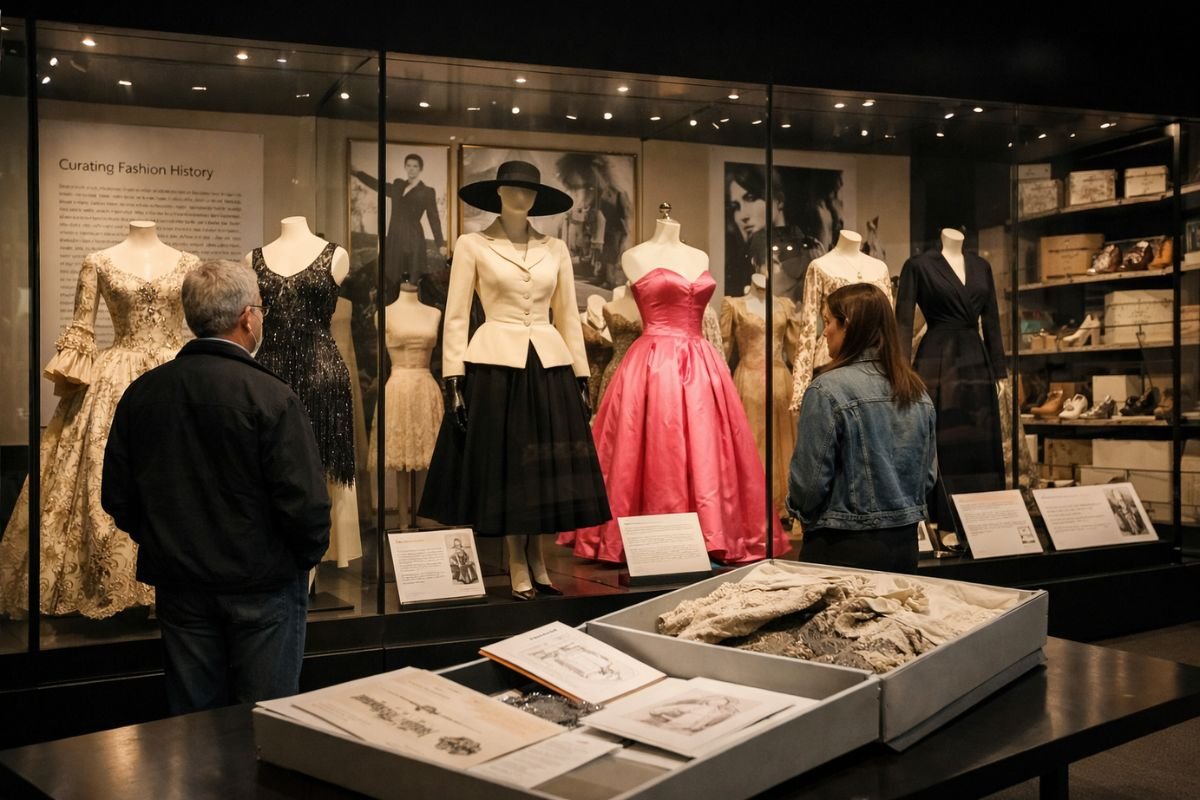
The experience of visiting a fashion museum is a powerful one. The clothes are beautifully lit, the text is written in a scholarly tone, and the presentation is such that you feel as though you are being presented with a very accurate view of the past. But fashion archives and museum collections are not objective representations of history. They are constructed in a very deliberate way, and they reflect a specific set of decisions.
View this post on Instagram
Clothes do not hang in museums by accident. Most clothes are worn, altered, passed down, or discarded. The clothes that end up in a museum collection have been chosen because they have been deemed important enough to be saved. And they have been deemed important because they have been associated with important designers, important people, and with beauty and style as those concepts have been understood in a dominant culture.
View this post on Instagram
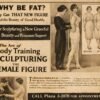
This is particularly evident when considering the size of the body. In fashion archives, the relative lack of large-size historical clothing has contributed to the assumption that people in the past had small bodies. This is not necessarily the case, as the lack of large-size clothing in fashion archives is as likely due to the collecting priorities of institutions as it is to the actual prevalence of smaller body sizes in the past.
For a long time, fashion museums have prioritized collecting items that display design innovation, craftsmanship, and association with important people. As a result, the wardrobes of the unusual and the exceptional are well represented, while the wardrobes of ordinary people are underrepresented. In this system, a dress associated with a monarch or a famous social figure has a clear path into the fashion archive, but the clothing of ordinary people, which comprised the vast majority of the population, is more likely to disappear.
Fashion archives and museum collections also reflect the histories of the institutions themselves. For many collections, the period in which they were built was shaped by more rigid ideas of taste, class, and decency. As a result, archivists worked within a clear framework, favoring items that conformed to an ideal of refinement and elegance. Garments that did not fit within the cultural understanding of the time could easily be overlooked, not necessarily because of individual bias, but because of the broader cultural context in which decisions were made.
At the same time, the context of the museum lends authority to surviving garments. Once an object becomes part of a collection, it becomes part of the evidence. It helps define what a particular period looked like. Visitors absorb these displays as visual truth. But the absence of certain kinds of garments, due to size, class, occupation, or use, influences perception just as strongly as the presence of others. The absence of information is not neutral; it is a guide.
This does not mean that museums are static or unresponsive. In recent years, many have reevaluated their collections, acquisition processes, and displays. There is increased interest in everyday garments, garments connected to diverse communities, and the social contexts of clothing rather than only the runway or royal courts. Digital archives and open-access collections are expanding what is possible. But the basic question of who defines what fashion history looks like still remains. The answer is complex and involves curators, donors, mission statements, financial structures, and cultural values. Fashion archives and museum collections are important tools for preserving the past, and they also reveal the values of the time in which they were assembled.
If we are aware of these issues, we can look at museum displays with greater understanding. Instead of asking only what a garment tells us about its time period, we might also ask what it tells us about its survival and what kinds of garments did not make the journey into the archive. The space between presence and absence is where another fashion history begins to emerge, one that is not just about design but also about memory, value, and selection.