
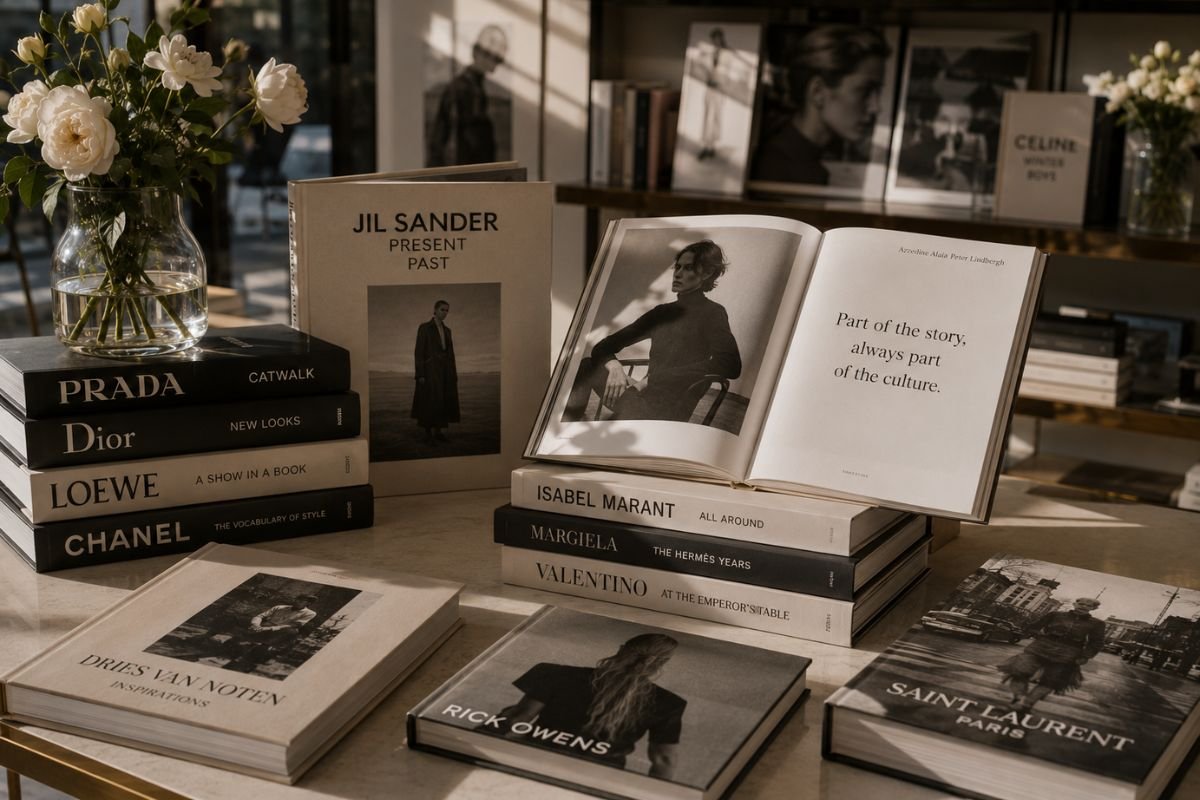
It would not be surprising to see books in luxury fashion advertisements, designer communities, fashion store displays, fashion photoshoots, or celebrity appearances. While books were once used mainly as literary symbols within the industry, they have become a recognizable feature that deserves greater attention. However, the main question is not only why books look good in fashion, but why fashion brands choose literature as part of their identity.
This phenomenon goes beyond the purely aesthetic presence of books. It reflects changes in the perception of culture and in the way luxury brands communicate in a world where visual expression dominates.
View this post on Instagram
Books as Cultural Symbols
There are numerous examples of fashion brands using cultural elements such as art, architecture, music, and film in their collections and advertising campaigns to express creativity and cultural awareness.
Books have become another way of doing the same.
For instance, placing a novel in an advertising campaign or in a model’s hands adds an intellectual dimension. A book may symbolize curiosity, education, imagination, or personal interests.
Therefore, it is not surprising that fashion houses have expanded from literary references to book clubs, conversations with authors, publishing projects, and bookstore events. Books are no longer just elements of a photoshoot but part of a broader cultural experience.
Why Fashion Brands Love Books
The growing use of books by fashion brands reflects a broader shift in the understanding of cultural symbols within the luxury industry.
Today, it is no longer enough to demonstrate exceptional craftsmanship alone. Consumers increasingly look for brands that are also culturally engaged. Reading provides an opportunity to communicate that engagement.
Selecting a meaningful book, collaborating with an independent bookstore, or hosting conversations with authors suggests that a brand values ideas and creativity as much as design. Such activities allow brands to engage consumers in something beyond shopping.
Social Media Changed the Meaning of Books
The visibility of books increased significantly with the growth of digital culture.
Platforms such as TikTok and Instagram popularized highly visual reading through communities like BookTok and Bookstagram. Along with the books themselves, covers, bookshelves, handwritten notes, and the act of reading became recognizable forms of self-expression that reached audiences far beyond traditional readers.
The fashion industry responded to these cultural changes.
As books became more visible online, they also evolved into recognizable cultural symbols within fashion campaigns.
This example shows how social media can reshape the meaning of familiar objects. Books still fulfill their traditional purpose, but they have also become symbols of a contemporary lifestyle.
When Culture Becomes Branding
Another interesting question arises from the growing relationship between books and fashion.
As literary imagery becomes more common, it is increasingly difficult to distinguish genuine cultural interest from strategic branding. Literary events, publishing projects, and library collaborations may reflect authentic artistic engagement, but they can also strengthen a brand’s position within the competitive luxury market.
However, these two motivations can coexist. Brands may genuinely appreciate literature while also recognizing its marketing value. The key question is not whether books appear in the fashion world, but how deeply they influence a brand’s ideas, collaborations, and community.
This distinction becomes especially important for consumers seeking authenticity rather than symbols alone.
Books Reflect Changes in Luxury Culture
The growing presence of books in fashion reveals more about contemporary culture than about luxury brands themselves.
In the past, status was associated mainly with rare materials and recognizable logos. Today, it is increasingly connected with knowledge, creativity, and cultural engagement. Fashion has responded by embracing symbols that communicate these qualities, and books have become one of the strongest examples.
Therefore, fashion’s interest in literature is not simply about reading. It reflects a broader transformation in the way luxury brands express culture and define their identity.