
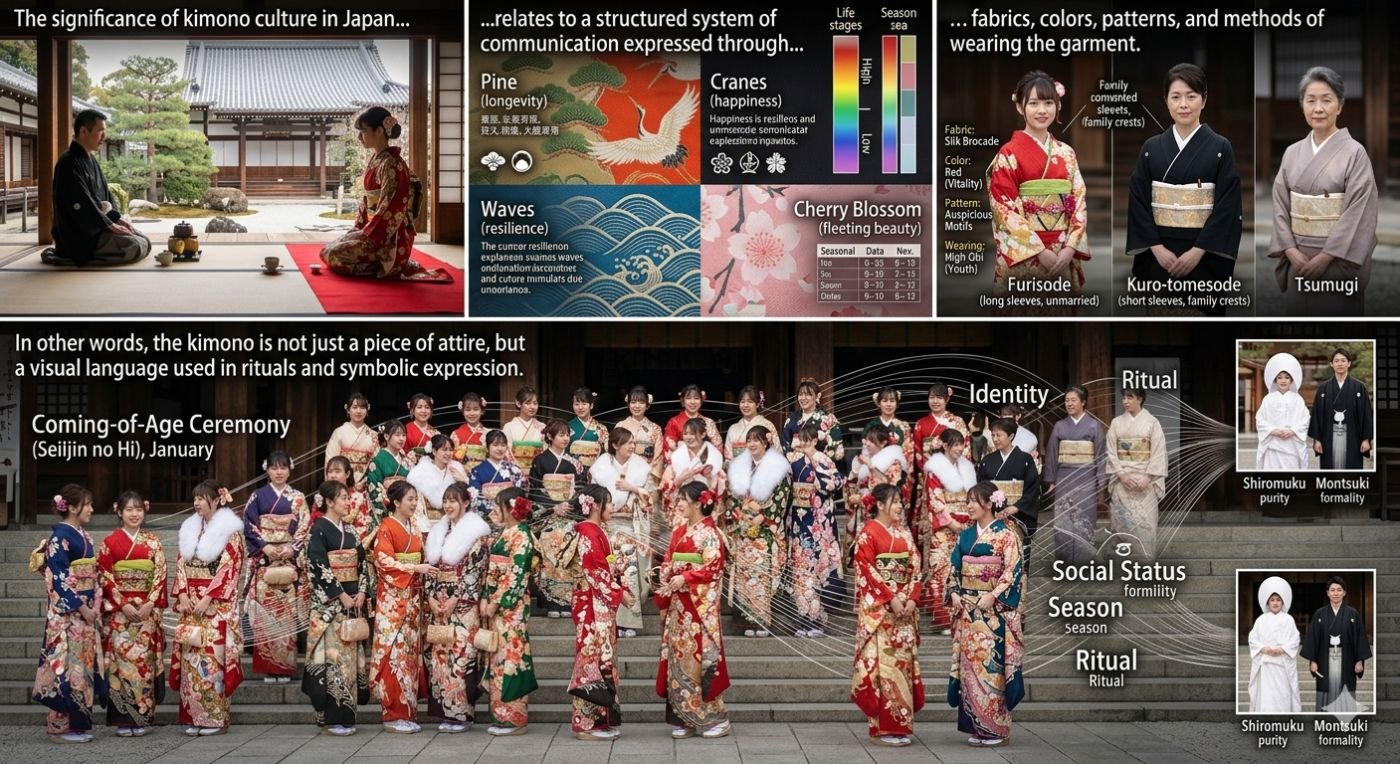
The significance of kimono culture in Japan relates to a structured system of communication expressed through fabrics, colors, patterns, and methods of wearing the garment. In other words, the kimono is not just a piece of attire, but a visual language used in rituals and symbolic expression.
Ceremony
Kimono culture in Japan implies a strong connection between ceremony and the garment. Its use is linked to specific occasions that require strict observance of established procedures. For example, a wedding ceremony, as well as a coming of age ceremony, may involve special kimonos to indicate formality and the importance of the day.
Thus, the ceremony becomes the contextual framework of the garment, making it part of ritual and symbolic activities. Moreover, particular types of garments, the way they are made, and the method of wearing all contribute to the overall understanding of the occasion.
Japanese Kimono Tea Ceremony
View this post on Instagram
Status and Social Position
Historically, this cultural system also contributed to social stratification, as distinctions between social classes could be observed through fabric, patterns, and the placement of crests. Consequently, the kimono communicated information about social position without the need for verbal explanation.
This visual language allows identification of status and social role through appearance alone.
Symbolism of Patterns and Motifs
Patterns used on kimono carry symbolic meaning. Depending on the season, motif, or occasion, different designs are applied to the garment. For instance, floral motifs may symbolize beauty, while water elements may represent purity. Therefore, patterns contribute to the symbolic function of the garment, making it a tool of non verbal communication.
These visual elements become another layer of symbolic expression within kimono culture in Japan.
The Use of Color
Color also has a symbolic function. Different colors correspond to different occasions and life stages. In addition, specific color combinations can emphasize the formality of an event or reflect maturity and status.
Thus, color becomes another way to communicate meaning within the structure of the garment.
Dressing Process
The process of wearing a kimono requires particular attention to the obi. It is tied according to the occasion and also serves as an indicator of status or formality. In this way, dressing itself becomes part of the ceremonial structure.
Consequently, attention to the method of wearing is an essential aspect of this tradition.
Time, Season, Situation
Kimono culture in Japan is characterized by sensitivity to seasons, occasions, and life stages. The selection of a garment depends on the time of year and the purpose of wearing it, reflecting how it is worn in everyday life. Fabric weight, color, pattern, and number of layers change according to the situation.
As a result, the garment reflects the environment and context in which it is worn.
Individuality Within a System
Despite the structured nature of kimono culture, there is space for individual expression. Within defined boundaries, personal taste can be reflected through choices of patterns and color combinations.
Thus, individuality is maintained within an established system.
Cultural Continuity
It is also important to note that kimono culture in Japan remains relevant as it preserves symbolic meaning and ritual importance despite changing times.
In this way, the kimono functions as a medium of cultural continuity.