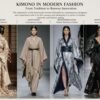

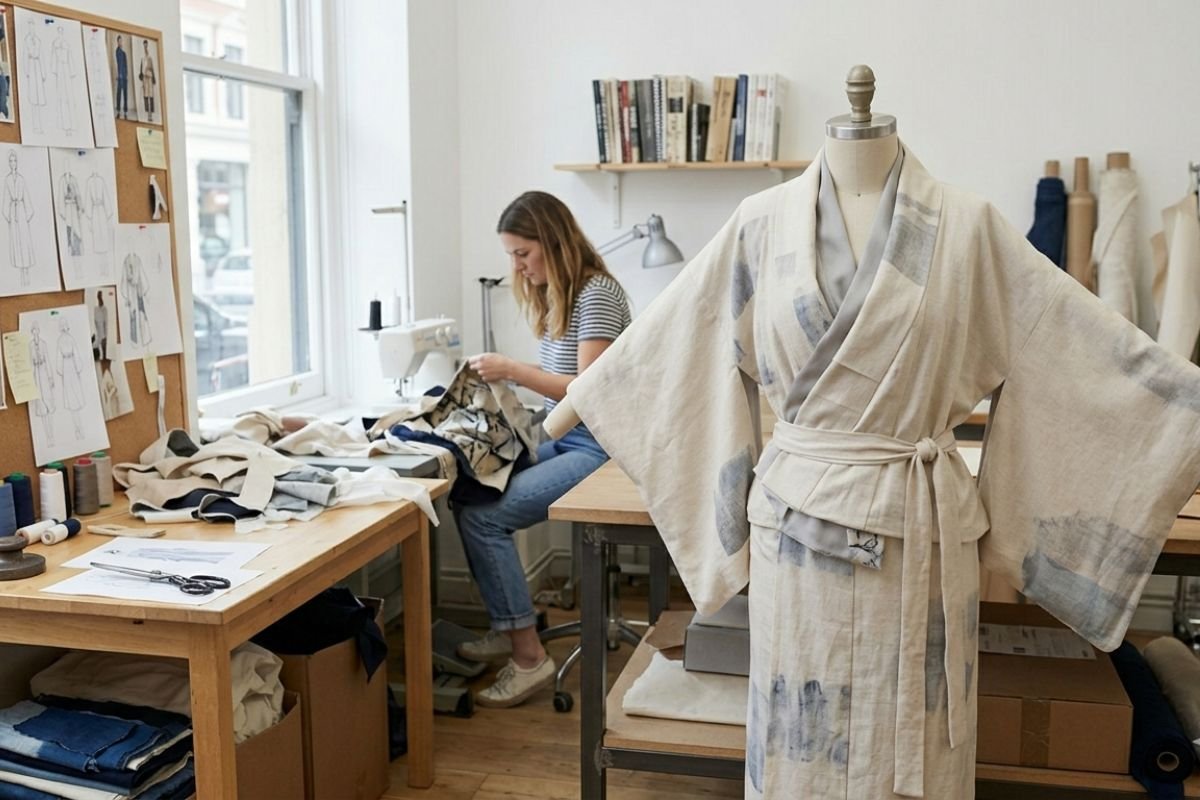
The process of using kimono silhouettes can be seen in three key elements of design: extended sleeves, wrap-based structure, and deliberate layering. These techniques serve as design methods that affect volume, movement, and garment structure.
Extended Sleeves as Structural Space
The use of kimono-like sleeves lies not in their width alone. Instead, designers integrate sleeves with the body of the garment, minimizing separation between the torso and arms. By creating continuous planes of fabric, they change the dynamics of volume expansion.
In terms of how designers use this silhouette, sleeve design serves as the starting point in garment construction. Since the sleeve extends from shoulder to cuff, its width and length dictate the overall scale of the silhouette.
Depending on its proportions, an extended sleeve enhances either volume or movement. The former creates voluminous shapes; the latter allows garments to flow more freely along the body.
Wrap-based Structure and Closures
Another distinctive feature of kimono silhouettes is their wrap structure. Unlike conventional designs, garments with this silhouette do not rely on fixed closures. Instead, the wrap technique allows the wearer to adjust the fit.
By using this structure, designers make garments more flexible and adaptable. How designers use kimono silhouettes becomes apparent when observing the flexibility of their constructions.
The wrap structure creates diagonal lines across the body. These lines give a dynamic character to the silhouette.
Layering as a Dimension Control Method
Kimono silhouettes use layering as one of the key structural techniques. Layers of fabric create depth and allow designers to add another dimension without increasing volume unnecessarily.
When discussing how designers use the kimono silhouette, it is essential to focus on the way layering transforms the garment. Depending on the number of layers, the silhouette gains or loses depth and becomes either more fluid or more structured.
Since each layer of fabric reacts individually, layering also contributes to movement within the design.
You May Also Like:
- Kimono in Modern Fashion: How Tradition Became Runway Innovation
- Kimono vs Yukata: What’s the Real Difference?
- Japanese Kimono: Where Heritage Meets Contemporary Fashion
Proportional Dynamics of Kimono Silhouette
When using this silhouette, designers redistribute volume across the garment. In contrast to other types of construction, kimono silhouettes tend to distribute volume more evenly, which changes proportions significantly.
In terms of how designers use kimono silhouettes, the lack of segmentation allows garments to appear as unified forms rather than combinations of separate volumes.
By adjusting sleeve width, wrap overlaps, and layering, designers can increase or reduce volume.
Fabric Properties and Structure
Designers use fabric properties as an integral part of garment construction. Thicker fabrics tend to retain the structure of the kimono silhouette, while lighter materials emphasize movement.
Thus, in this type of silhouette, fabric plays a significant role. Understanding how designers use kimono silhouettes includes recognizing how different materials influence the final appearance.
Depending on fabric type, garments may appear either fluid or structured.
Impact of Movement on Garment Structure
All three elements combined create a sense of continuous movement. Garments built on this silhouette are designed to accommodate motion rather than remain fixed.
By redistributing volume effectively, fabrics can move and shift, changing the overall appearance of the garment.
By using kimono silhouettes, designers create garments that are dynamic and expressive.