
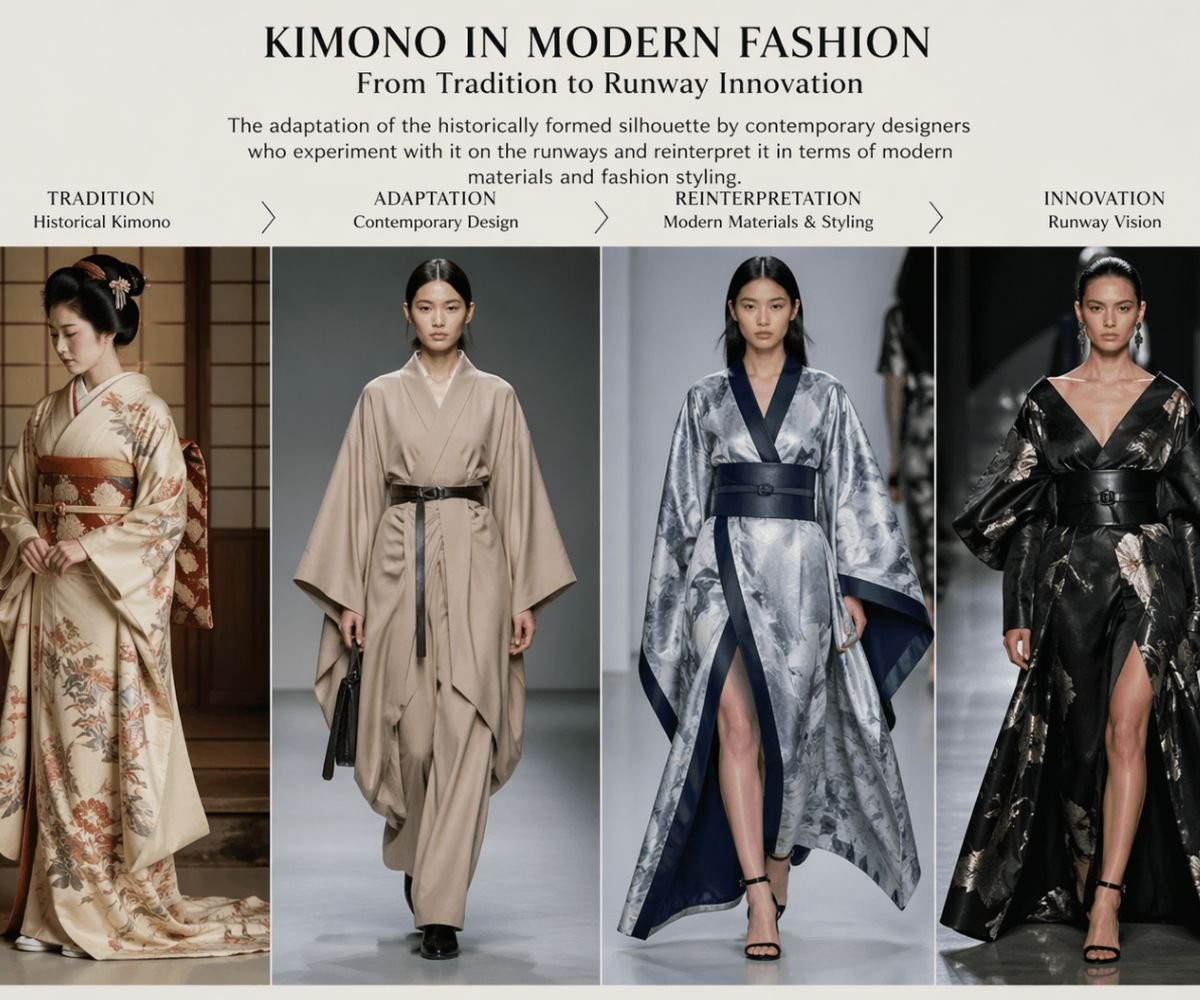
The representation of kimono in modern fashion refers to the adaptation of the historically formed silhouette by contemporary designers who experiment with it on the runways and reinterpret it in terms of modern materials and fashion styling.
Interpretations of the Form in Runway Collections
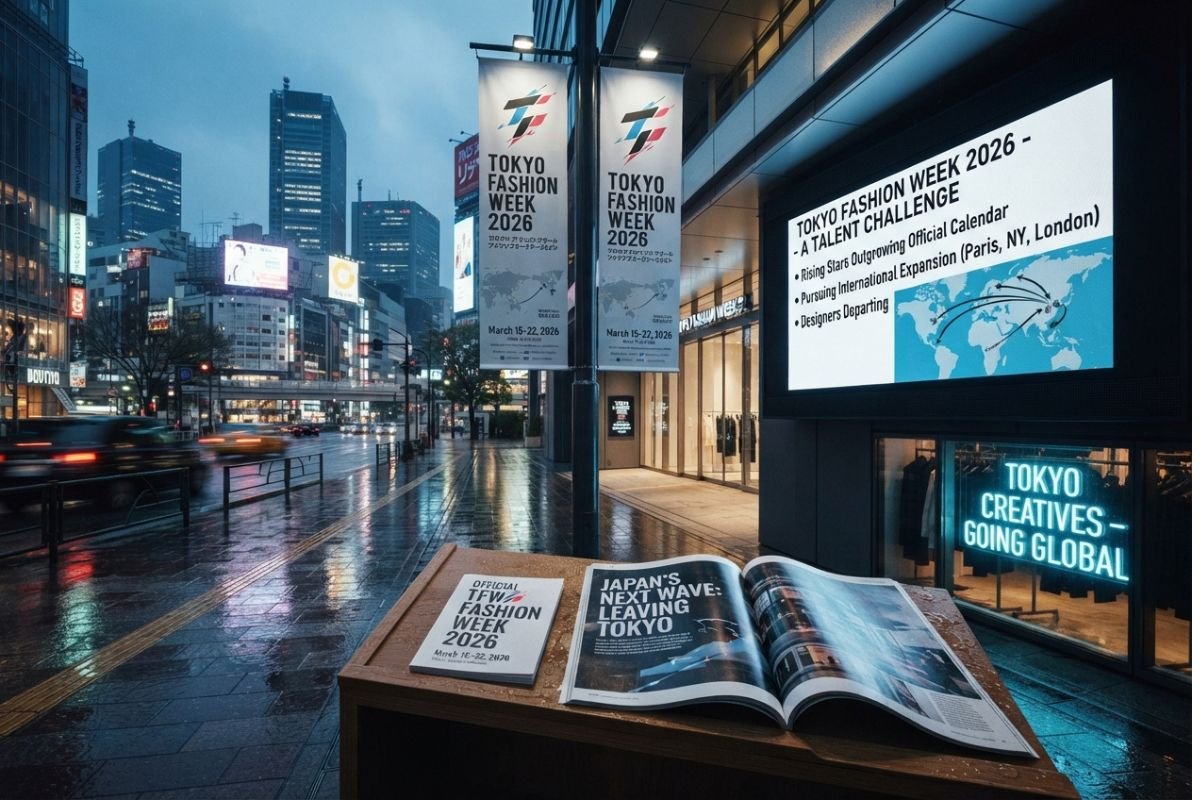
During recent fashion weeks in Paris, Milan, and Tokyo, some runway designs included garments with kimono-style forms. Designers such as Yohji Yamamoto and Rei Kawakubo are known for their interest in volume, fluidity, and asymmetry. The latter implies a specific way of arranging the garment, including wide sleeves and wrapped shapes.
This approach can be compared to earlier transformations in fashion history, such as those introduced by Paul Poiret, whose work redefined the silhouette by moving away from structured forms toward more fluid and unrestrained shapes.
Therefore, kimono in modern fashion is characterized by nontraditional construction, volume, asymmetry, and movement. In modern runway collections, garments based on the kimono silhouette are designed to change the shape of the body, and sleeves become an essential detail.
Luxury brands also experiment with such forms, adapting them to their collections in a unique way, for example by creating hybrid forms that combine features of coats, robes, and jackets.
The Use of Materials in Contemporary Kimono-Style Garments
Modern fabrics differ significantly from those used in traditional kimono production, allowing designers to explore new solutions. For instance, synthetic or structured materials can be combined with kimono-style design to create distinct silhouettes.
As a result, a kimono-inspired garment may vary greatly in movement and form depending on fabric characteristics. This aspect provides additional freedom of interpretation and allows designers to explore different directions in contemporary kimono-styled fashion.
Adoption of the Kimono Silhouette in Streetwear Fashion
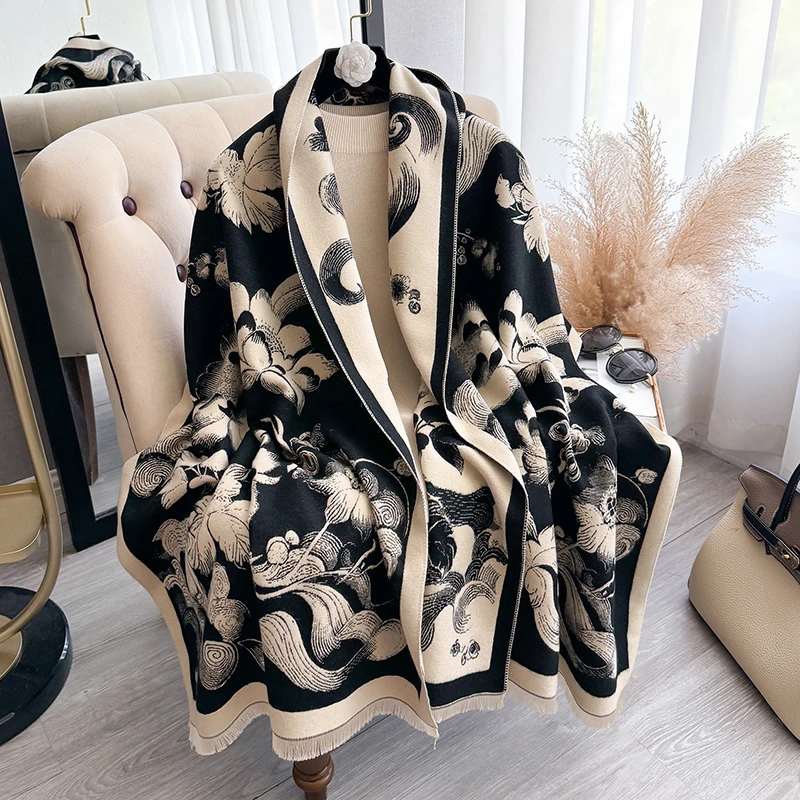
Kimono-inspired garments are also present in street style and everyday life, often influenced by celebrity styling. Such forms are adapted to modern lifestyle requirements and become part of a layered look created by fashion enthusiasts in urban areas.
Unlike runway interpretations, streetwear adaptations are not limited in terms of fabric types and may include materials such as denim. In streetwear fashion, this silhouette does not have strict characteristics and can be adapted easily.
Kimono as a Cultural Referent and Its Interpretation
The adoption of the kimono silhouette by contemporary designers involves interpreting its visual language and transforming its elements into modern styles and trends. For instance, the proportions of kimono-inspired garments and construction techniques are used to create new silhouettes.
Thus, the meaning of this design element evolves through cultural references and through the adaptation of visual characteristics and proportions into contemporary fashion, contributing to how the kimono became a global symbol.
Impact of the Kimono on Contemporary Fashion Theory and Practice
As a result of adopting this traditional design element into contemporary garments, new solutions for designers have emerged. The concept of the kimono is associated with a particular way of designing garments in which wrapping, layering, and volume play an important role.
This principle influences fashion theory as well as the perception of garments and their design. In addition, designers adapt elements of the kimono silhouette in line with modern trends related to flexible and comfortable clothing.
Kimono in Contemporary Fashion: Conclusions
Nowadays, the kimono is considered a historical element whose silhouette is adapted to the requirements of contemporary fashion by designers around the world.