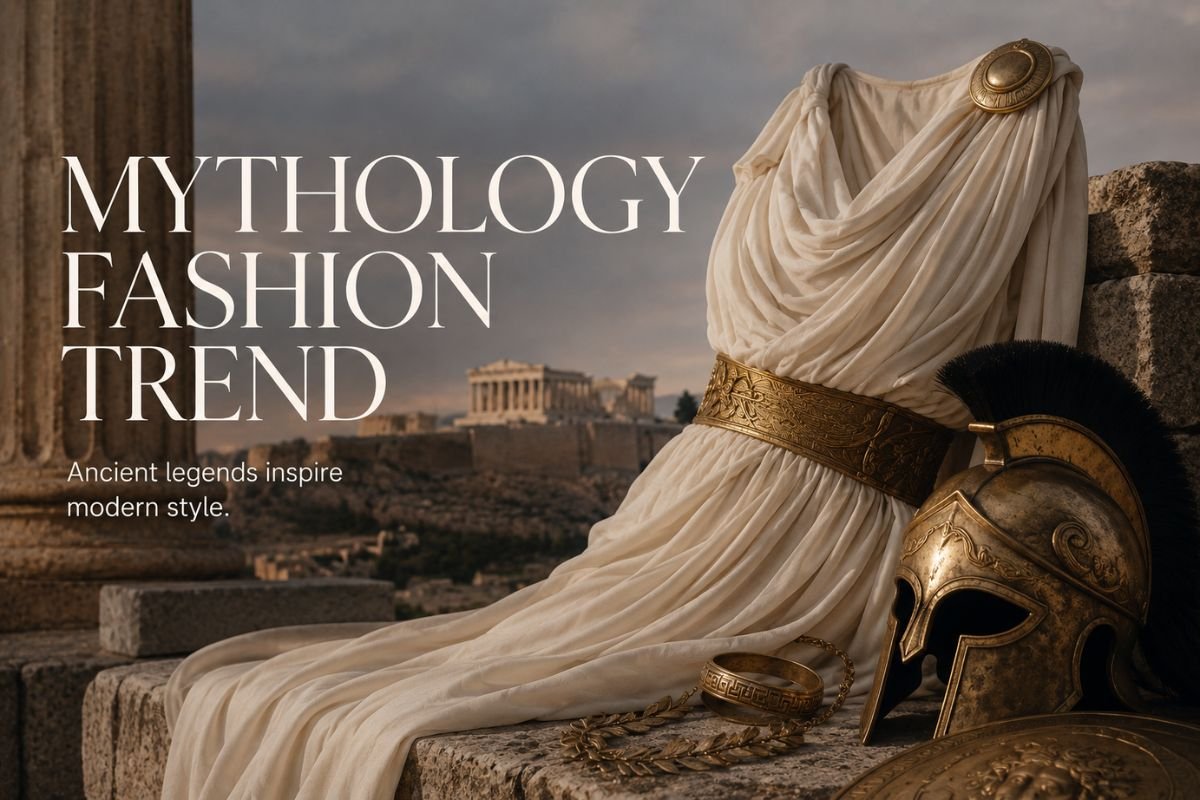

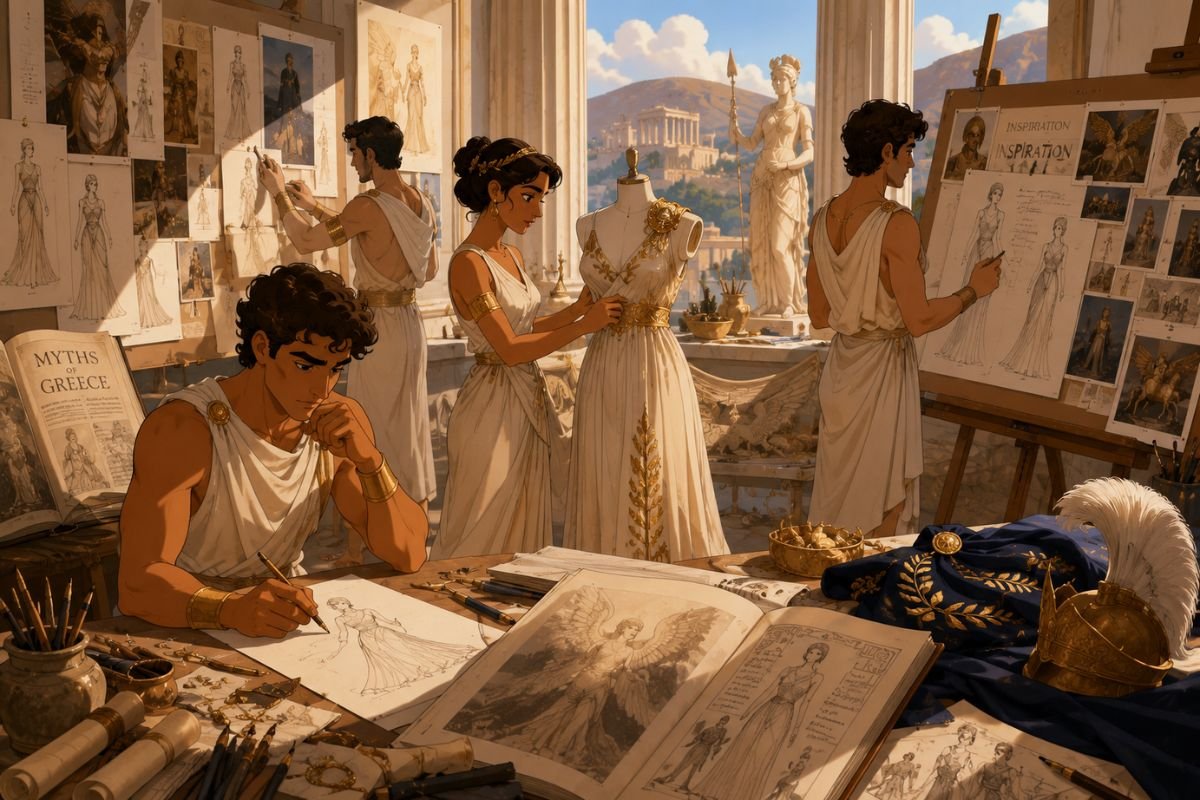
It is obvious that using myths in fashion does not presuppose creating historically accurate outfits for their characters. Rather, Mythology Fashion Designers have used legends as starting points and sources of inspiration for new approaches to beauty, power, identity, and craftsmanship.
View this post on Instagram
Interest in mythology has become especially prominent in 2026.
Following the success of Christopher Nolan’s The Odyssey, mythology once again became a significant part of the fashion world. While Zendaya’s ELLE Italia editorial and promotional looks were not the origin of this trend, they highlighted the fact that mythology has always been one of the richest sources of inspiration in the fashion industry.
Alexander McQueen Transformed Greek Mythology into Haute Couture
Rarely has there been a mythology inspired designer like Alexander McQueen.
His first haute couture collection for Givenchy, presented in 1997, was named The Search for the Golden Fleece and referenced the Greek legend of Jason and the Argonauts. Unlike most of McQueen’s collections, this one did not illustrate the story but offered powerful silhouettes, dramatic tailoring, and symbolism that evoked the image of warriors and classical mythology.
View this post on Instagram
Surprisingly, this collection became prominent again almost thirty years after it was first presented.
In connection with promotional events for The Odyssey, Zendaya chose an archival piece from McQueen’s Givenchy collection. This unusual combination created a unique dialogue between fashion history and contemporary cinematography. It should be noted that, even though the legend of the Golden Fleece and The Odyssey are different Greek myths, they both belong to the same mythological tradition, making the archival piece particularly relevant and meaningful rather than simply nostalgic.
Medusa Became the Emblem of Versace
Unlike other designers who sometimes use mythology in their collections, Versace has included it in its brand identity.
By choosing Medusa as Versace’s emblem, Gianni Versace selected a symbol of irresistible appeal and unforgettable presence.
Since then, this logo has remained one of the most distinctive symbols in luxury fashion.
However, unlike brands that recreate ancient Greece through clothing, Versace made mythology part of its visual identity.
The symbol of Medusa, references to ancient architecture, classical motifs, and powerful imagery became the bridge between antiquity and modern luxury.
Madeleine Vionnet Transformed Fashion with Ancient Greece
While some mythology inspired designers used characters from myths, Madeleine Vionnet found inspiration in Greek sculpture.
Her innovative technique of bias cutting made fabric move naturally and freely around the body in a way that resembled the drapery of ancient statues. Instead of creating static and rigid silhouettes, Vionnet strived for movement, balance, and proportion inspired by antiquity.
Her designs are considered among the earliest examples of transforming classical aesthetics into modern couture rather than copying historical styles.
Madame Grès Transformed Draping
If Vionnet introduced movement, Madame Grès introduced draping.
View this post on Instagram
Her dresses became famous for hundreds of precise pleats that resembled marble sculptures of ancient Greece. As a result, these dresses appeared both architectural and fluid at the same time.
Even though her collections were thoroughly modern, their visual language remained consistent with Hellenistic art and classical proportions. Today, her influence can still be seen whenever designers explore sculptural silhouettes inspired by antiquity.
Mythology in the Contemporary Fashion Industry
As shown above, the influence of mythology did not end with twentieth century fashion.
Many major fashion houses have reinterpreted Greco Roman aesthetics in different ways, including Dior, Valentino, Dolce & Gabbana, Chanel, and Jean Paul Gaultier.
Some emphasize flowing drapery and architectural silhouettes. Others reference mythology through symbolic accessories, gold embellishments, ceremonial proportions, and storytelling rather than historical reconstruction.
Such variety reveals something essential.
There is no single mythology inspired aesthetic with a fixed set of rules. Each designer chooses a different way of interpreting it according to their own creative vision.
Why Do Designers Reinterpret Myths Over and Over?
The fact that myths continue to inspire designers is far from random.
Ancient myths already contain stories that people recognize and understand. Athena becomes a symbol of wisdom and strategy. Medusa represents transformation, danger, and power in various cultural interpretations. Jason’s journey becomes an embodiment of ambition and perseverance.
The fashion industry operates through visual storytelling, making mythology an exceptionally flexible and rich source of inspiration.
Rather than inventing entirely new symbols, designers reinterpret myths that have existed for thousands of years and give them new meanings.
This approach makes collections intellectually rich while remaining accessible to a broad audience.
Mythology in the Fashion Industry Is More Than a Reference to History
One of the main misconceptions about the influence of mythology on fashion is that it simply refers to the past.
In fact, mythology functions more as a creative language.
Alexander McQueen transformed one of the greatest Greek legends into avant garde couture. Versace embedded Medusa into one of the strongest identities in luxury fashion. Madeleine Vionnet and Madame Grès looked to classical sculptures rather than the costumes of ancient times and reshaped the relationship between fabric and the human body.
The renewed attention surrounding The Odyssey in 2026 has simply reminded the fashion industry that mythology has never disappeared. It continues to evolve through new collections, editorials, films, and creative collaborations.
For modern Mythology Fashion Designers, ancient legends are no longer relics of history. They remain living sources of inspiration and creative ideas.