
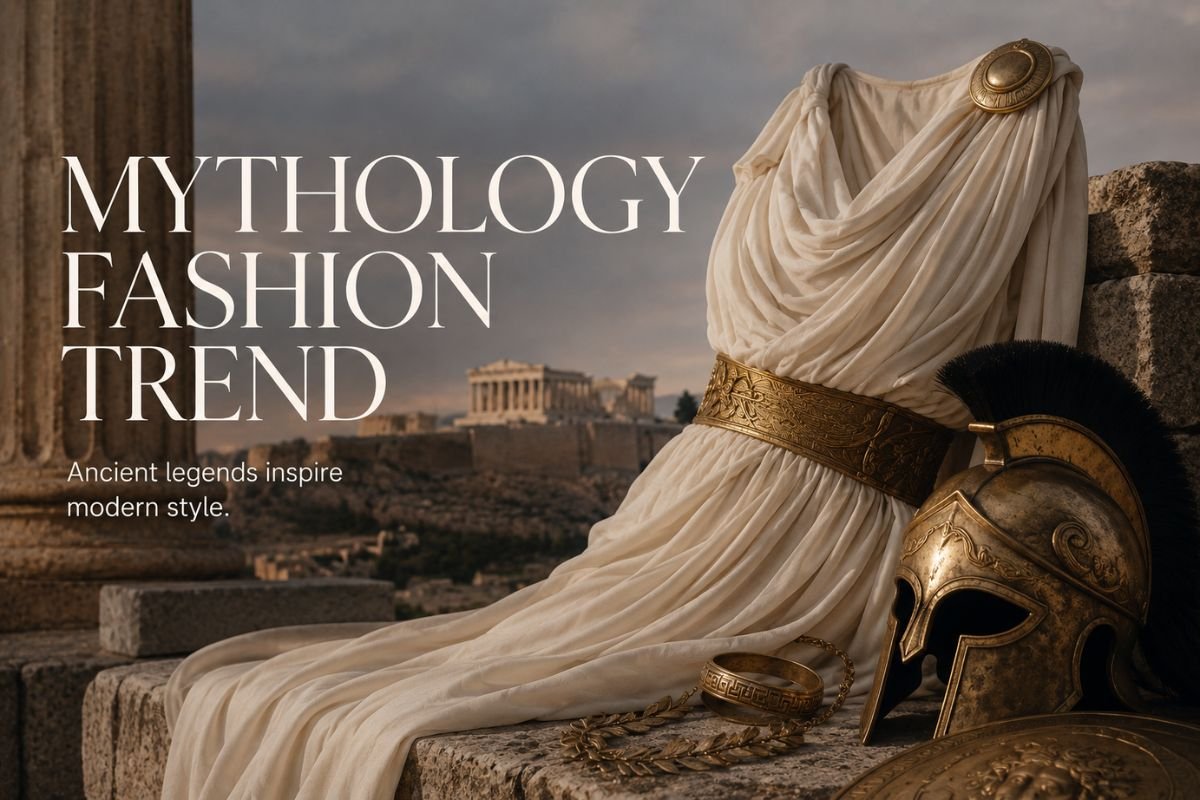
With the publication of the ELLE Italia editorial with Zendaya, who stars in Christopher Nolan’s upcoming The Odyssey, the editorial not only became a tribute to one of the key style icons of our time but also an evidence of the continuous importance of the Mythology Fashion Trend. In contrast to other fashion trends, where Greek mythology becomes a nostalgic object for inspiration, the editorial presents it as a creative language that continues to shape the fashion industry through storytelling.
View this post on Instagram
How the Mythology Fashion Trend Transcends Historical Costume Interpretations
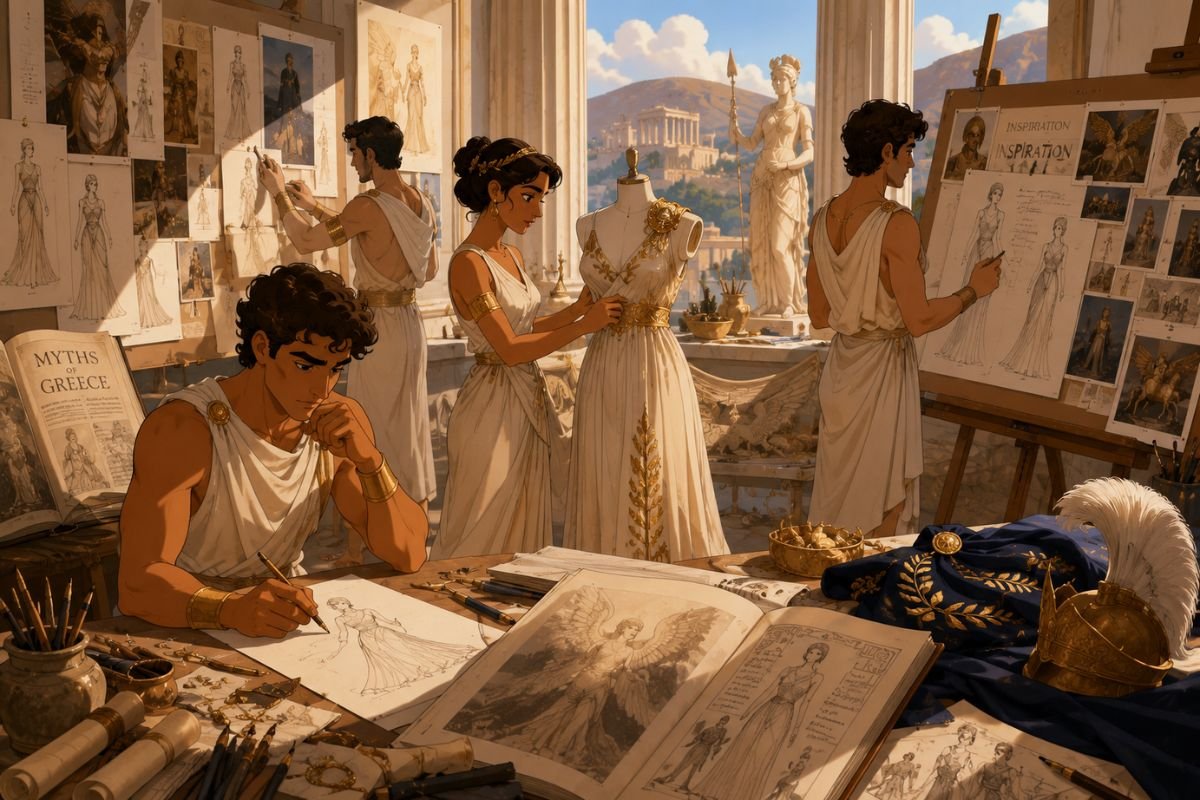
The Mythology Fashion Trend continues to evolve in fashion since fashion designers are not interested in recreating the historical outfits. Rather, they find inspiration in the symbolic value and meanings that mythology contains. For instance, Greek mythology possesses a huge selection of symbols that are recognizable across cultures. Athena represents wisdom and strategy, Aphrodite, beauty and attraction, and Artemis, independence and connection with nature. These mythical figures carry the messages that modern audience understands.
Fashion does not try to dress up models as the characters of legends. Rather, it takes the traits that define these characters and creates visual narratives through them. For instance, a sharp silhouette could symbolize silent strength, soft fabrics remind viewers of classical sculptures, metallic finishes resemble the ritualistic armor without imitating it.
Zendaya’s ELLE Italia Cover as a Part of Bigger Creative Trend
It is worth mentioning that at the time when the mentioned cover of ELLE Italia was published, the mythology in fashion has been already becoming popular via several creative avenues.
Firstly, the movie based on one of the literary works of ancient Greek times by Homer The Odyssey, written by Christopher Nolan, created wide interest among audiences long before its premiere. As a part of this cultural event, Zendaya’s depiction of the goddess Athena has become popular in fashion magazines and other places of fashion discussions.
That is why this editorial has become an interesting case.
The fashion designer does not ask the viewer to admire ancient Greek history. What the reader sees is a creative reinterpretation of mythology through couture, editorial photography, and modern visual storytelling. Thus, the figure of Athena turns into a symbol of intelligence and leadership, while the broader visual tradition of curvy women in classical art demonstrates how mythology has long offered diverse interpretations of the human form.
What distinguishes mythology inspired fashion from costume design is the fact that the former transforms the past into art.
Long-Lasting History of Greek Mythology Fashion in Luxury Industry
Although Zendaya’s ELLE Italia cover has revived the interests in mythology inspired fashion, luxury houses have already been exploring the classical themes for decades.
For instance, Versace has long chosen a Medusa as the company’s logo because of her captivating character. Instead of illustrating a literal image of ancient legend, the designer chose the symbol that represented confidence and attraction.
Many other brands like Alexander McQueen and Schiaparelli have approached mythology in other ways. The first one often used mythology in his dramatic runway presentations combining the history with fantasy. On the contrary, the latter has preferred surrealist forms that are similar to the classical sculpture and mythology.
All these examples show that Greek mythology fashion is not a temporary trend but a part of the fashion industry’s creative vocabulary.
How Cinema Drives the Mythology Fashion Trend
For decades fashion and cinema have influenced each other. In recent years this influence has intensified significantly.
Today large-scale productions become fashion discussions even before their premiere in the cinema. Character reveals, promotional photography, magazine covers, and international press tours create visual moments viewed by millions via digital media.
In the case of The Odyssey, it means that as soon as anticipation for the upcoming movie has started to grow, mythology has returned to the cultural conversations again. Fashion publications, entertainment media, and social platforms started discussing the ancient symbols alongside couture, celebrity styling, and editorial imagery.
This is not just film promotion.
The film provides the narrative framework, while fashion transforms the story into the visual experience that exists separately from the film. As a result, mythology influences magazine editorials, runway collections, and luxury campaigns all at once.
Why Goddess Aesthetics Become Popular
Increased interest in the aesthetics of goddesses is connected not just to the appreciation of the ancient history.
Modern fashion has increasingly tried to use storytelling in order to tell the story about the person rather than about the garment.
In this regard, the myths of ancient times give fashion designers a lot of material since the mythical figures naturally embody recognizable human qualities.
Thus, Athena represents intelligence, Aphrodite – the attraction, Persephone – transformation, and Nike – victory.
These archetypes are culturally recognizable even to the people who do not know any information about ancient mythology. That is why fashion can use the centuries-old symbolism and present it through the contemporary design.
The viewer feels the recognizable emotions without needing additional historical information.
Sculptural Couture Revives Ancient Inspiration in Modern Designs
One of the main visual features of the Mythology Fashion Trend is the renewed interest in the sculptural fashion.
Contrary to the fashion that is characterized by elaborate ornamentation, many modern designs pay attention to proportions, draping, and structure. For instance, pleats of fabric can create the movement similar to classical sculptures. Silhouettes of corsets resemble carved marble forms. Flowing dresses seem to be architectural despite their fluidity.
Unlike the imitation of ancient garments, such designs reinterpret the visual language of sculptures.
This allows designers to pay tribute to the classical influences but create collections that look modern.
Editorial Storytelling Makes Fashion Deeper
Modern magazine editorials have stopped being mere presentation of the seasonal collection.
Today the best fashion stories include photography, cinema, literature, architecture, and history in the same visual narrative. As the success of Zendaya’s cover shows, editorial storytelling has the power to turn celebrity feature into the cultural discussion.
The clothes themselves cannot explain the images.
Lighting, location, posture, composition, and symbolism work together to create the atmosphere that invites interpretation. Readers start wondering about the choice of certain references, their meaning, and connection to the contemporary culture.
That is why the editorials that are inspired by the mythology stay relevant long after their publication.
Why the Mythology Fashion Trend Is Important in Contemporary Times
The increased interest in mythology in fashion has not happened independently.
Modern luxury brands increasingly compete through the storytelling rather than craftsmanship. Fashion is consumed through social media, short videos, digital editorials, and entertainment franchises that require memorable visual identities.
In this respect, the mythology is an ideal source of the inspiration.
Its stories are recognizable in different cultures, its symbols are powerful, its visual language easily transfers to the fashion photography and haute couture. The most important thing about the mythology is that it allows designers to express their modern ideas about identity, resilience, leadership, femininity, and transformation without relying on any temporary trends.
This is why the mythology continues to appear in fashion.
A Trend Based on Timeless Stories
Zendaya’s ELLE Italia cover may become one of the defining images of the Mythology Fashion Trend in 2026. However, this phenomenon includes a much wider range of events and phenomena.
The Mythology Fashion Trend is an illustration of the fashion’s constant attempts to reinterpret the cultural history instead of its conservation. Unlike ancient Greek history, which is now confined to the museums, literature, and archaeology, mythology continues to evolve through the haute couture, editorial photography, luxury branding, and cinematography.
As long as the fashion seeks the narratives that communicate something more than the appearance of the product, mythology will continue to be one of the richest sources of the creative inspiration. Instead of looking to the past, fashion designers use ancient legends to imagine the new interpretations of the contemporary styles.