
In July 2026, Zendaya arrived at a Paris photocall for Christopher Nolan’s The Odyssey wearing a piece of fashion history. Her white Givenchy couture dress, designed by Alexander McQueen in 1997, featured dramatic padded shoulders, oversized cuffs, and a striking gold headpiece by Philip Treacy. Nearly three decades after its runway debut, the ensemble had found an unexpected new setting.
McQueen originally created the look for The Search for the Golden Fleece, his first haute couture collection at Givenchy, inspired by the Greek legend of Jason and the Argonauts. Zendaya’s film drew from a different ancient epic, but the connection made the archival choice particularly fitting.
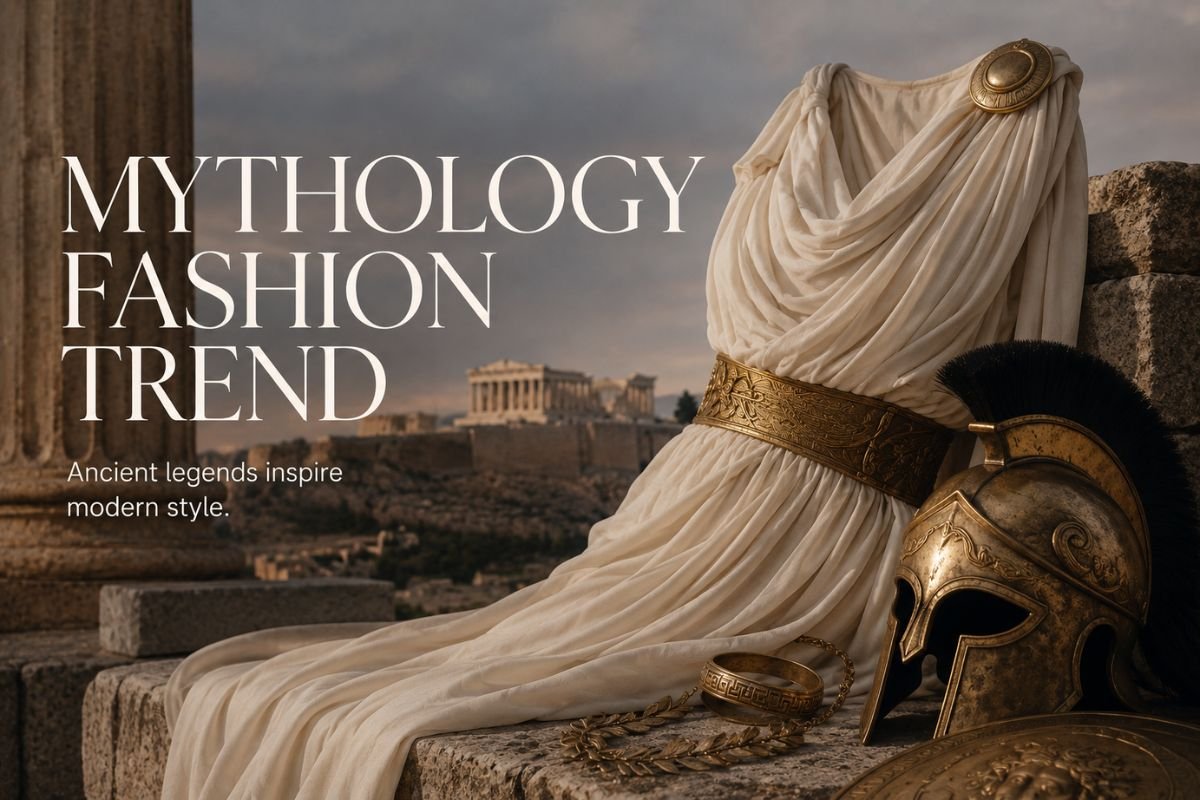
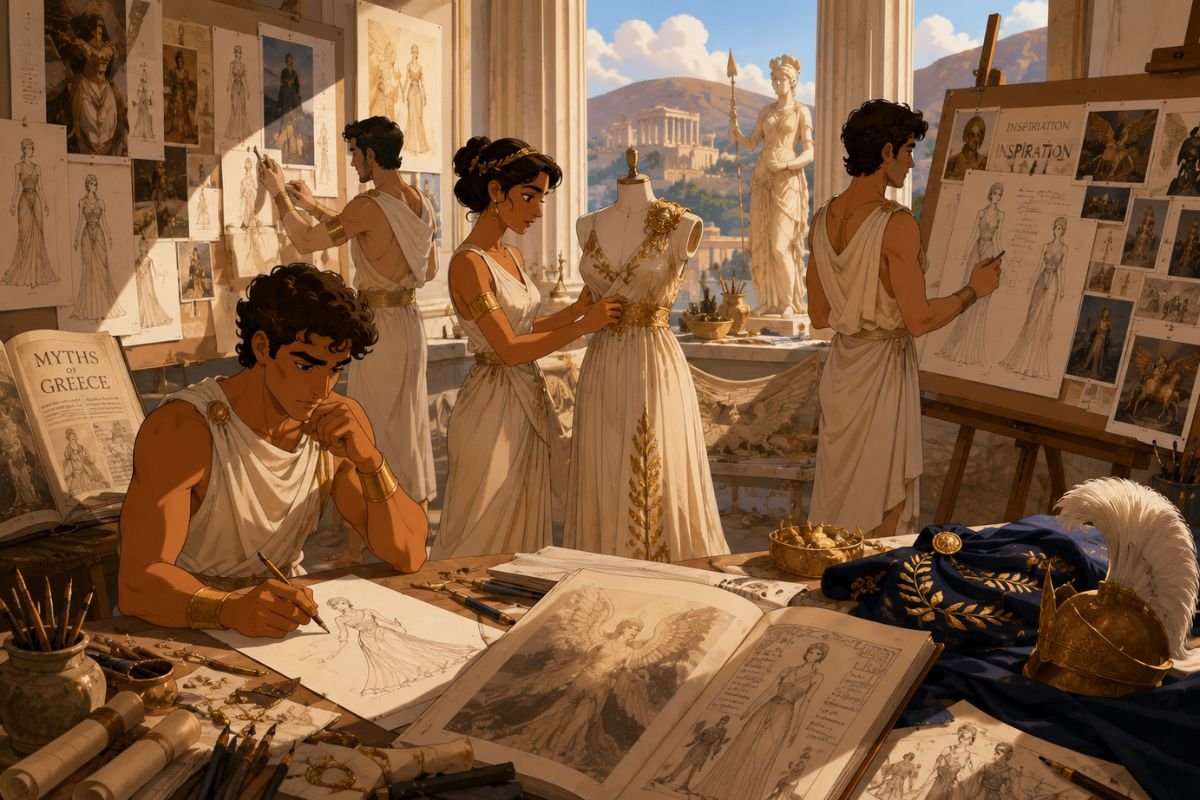
McQueen was hardly the first designer to look toward antiquity. From the Medusa emblem of Versace to the sculptural gowns of Madame Grès, ancient stories and classical art have shaped fashion in remarkably different ways. Some designers borrowed recognizable mythological figures, while others found inspiration in the draped garments and idealized forms of Greek sculpture.
View this post on Instagram
Alexander McQueen Brought Greek Mythology to Givenchy
Alexander McQueen’s debut couture collection for Givenchy in January 1997 was an ambitious introduction to the French fashion house. Titled The Search for the Golden Fleece, it drew on the legend of Jason, who sailed with the Argonauts in pursuit of a mythical golden fleece.
McQueen translated that world into sharply constructed garments, dramatic headpieces, and designs that suggested mythological warriors rather than literal costumes from ancient Greece.
Zendaya’s archival Givenchy look returned to public attention during the promotional events for The Odyssey. The fitted white dress, with its architectural shoulders and exaggerated cuffs, looked strikingly contemporary despite its age.
The choice also connected two separate Greek stories. Jason’s quest for the Golden Fleece and Odysseus’s journey home belong to different myths, but both provided material for a fashion moment nearly thirty years after McQueen’s original collection.
The renewed attention also extended to Zendaya’s ELLE Italia editorial and promotional looks, part of a wider fascination with the visual world surrounding Nolan’s film.
Why Gianni Versace Chose Medusa
For Gianni Versace, mythology became part of the fashion house’s identity rather than the inspiration for a single collection.
The Italian designer chose Medusa, the figure from Greek mythology whose gaze could turn people to stone, as the emblem of his label. Versace was fascinated by classical art and the visual heritage of southern Italy, where Greek and Roman influences remain visible in architecture and decorative objects.
The Medusa head became a recognizable feature of the brand, appearing on accessories, hardware, prints, and other designs.
Its appeal was not limited to the mythological story. The image had an ornamental quality that worked particularly well with Versace’s bold use of gold, elaborate patterns, and striking silhouettes.
While ancient Greek clothing relied on relatively simple garments arranged through folds and fastening techniques, Versace’s designs embraced the theatrical possibilities of modern fashion.
His use of Medusa illustrates how a mythological figure can become an enduring design signature without requiring every collection to tell the original story.
View this post on Instagram
Madeleine Vionnet Found Inspiration in Greek Sculpture
Madeleine Vionnet approached classical antiquity through the movement of fabric.
The French couturier became famous for her mastery of the bias cut, a technique that involves cutting fabric diagonally across its weave. This allows the material to stretch and fall differently around the body, creating fluid silhouettes without relying on rigid construction.
Vionnet’s dresses often recalled the flowing garments depicted in ancient Greek sculpture. Fabric followed the body’s natural contours, forming folds that changed as the wearer moved.
Her work was not primarily about representing gods or retelling myths. She was interested in the proportions, balance, and drapery associated with classical art.
That distinction is important when looking at the relationship between mythology and fashion. Designers have often drawn from the same ancient visual culture that produced mythological imagery, even when their collections did not reference a particular legend.
Vionnet’s technical innovations helped bring those classical influences into modern dressmaking, contributing to the broader evolution of historical styles in fashion.
Madame Grès Turned Fabric Into Sculpture
Where Vionnet explored the movement of cloth, Madame Grès became celebrated for the extraordinary precision of her draping.
Her evening gowns featured narrow pleats arranged by hand, sometimes requiring considerable lengths of fabric to create their intricate surfaces. The resulting dresses appeared almost sculpted around the body.
Grès frequently worked with classical forms, producing gowns that recalled the draped figures of Greek and Roman statuary. Their visual impact came from the arrangement of fabric rather than elaborate decoration.
The effect could be deceptively simple from a distance. Up close, the craftsmanship revealed an intricate understanding of how material could be folded, gathered, and shaped.
Her work also demonstrates why classical influences have remained important to haute couture. Ancient sculpture offered designers a way to study the relationship between fabric, movement, and the human form, while modern techniques allowed them to explore those qualities in entirely new garments.
View this post on Instagram
How Mythology Continues to Influence Fashion
The influence of ancient stories extends well beyond these four designers.
Fashion houses including Dior, Valentino, and Dolce & Gabbana have explored classical imagery through different collections, using references that range from Greco-Roman ornament to mythological figures and ceremonial dress.
Some designs incorporate recognizable symbols, while others draw on architectural silhouettes or the proportions of classical sculpture.
The distinction between mythology and classical aesthetics is worth keeping in mind. A dress with Grecian draping is not necessarily inspired by a specific myth, just as a Medusa emblem does not need to reproduce the story of the character to carry meaning.
For contemporary mythology fashion designers, the creative possibilities lie in choosing which elements of antiquity belong in a modern collection.
Zendaya’s 2026 Givenchy appearance offered a particularly memorable example. A dress conceived for McQueen’s interpretation of Jason and the Argonauts found its way into the promotional wardrobe of a film about Odysseus, carrying its original fashion history into an entirely different moment in popular culture.