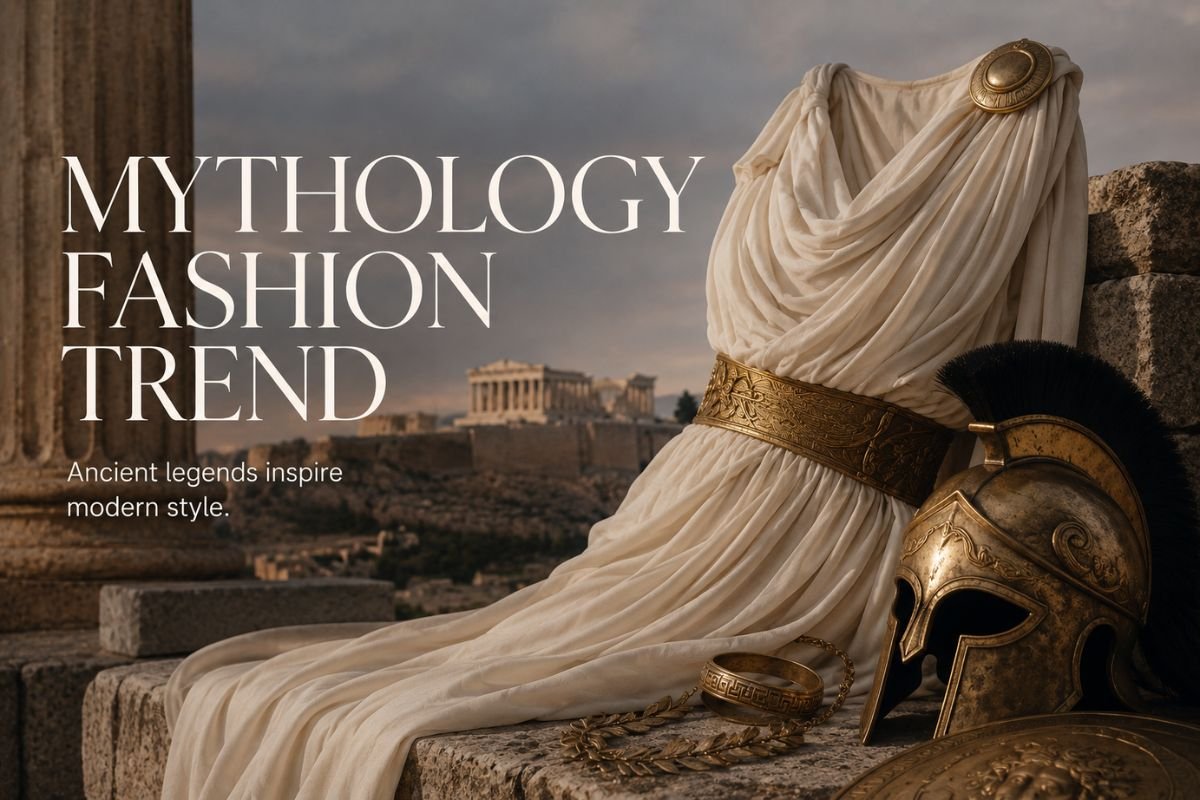

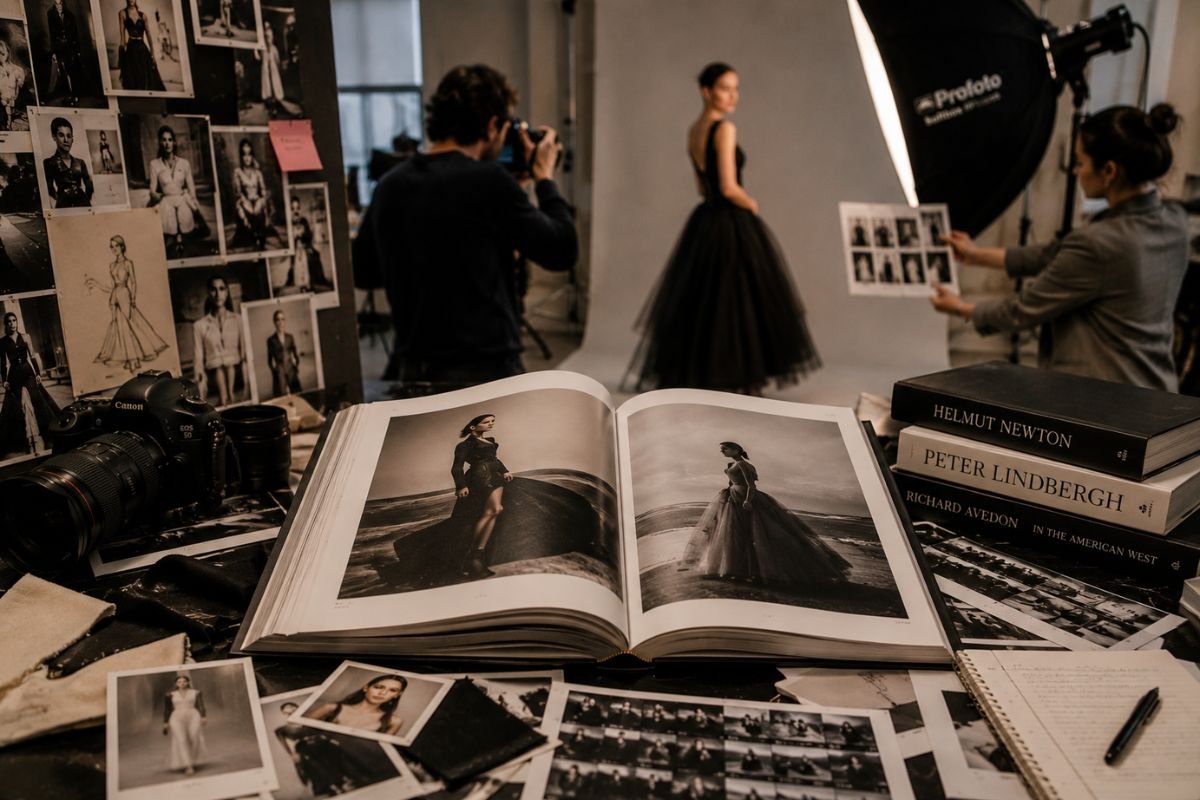
Outstanding fashion editorials are never just about clothes. Before creating editorial images, creative teams usually develop a concept that gives the photographs deeper meaning. Books have long been one of the most reliable sources of inspiration.
In fashion photography, books can establish a mood, reveal a character’s personality, reference a historical period, or reinforce the atmosphere of an editorial. In this way, fashion images communicate much more than clothing alone and encourage different interpretations.
Art Direction Helps Fashion Images Go Beyond Fashion
Art direction is the language of editorial photography. Every element within the frame contributes to that language, and books often become part of it.
By selecting the right book, photographers can evoke curiosity, nostalgia, romance, mystery, or modernity without saying a word. Books become natural elements within the world that the editorial creates.
Leading magazines often use libraries, reading rooms, writing desks, and carefully selected publications to build images that feel believable and emotionally rich. The goal is not to highlight the book itself but to strengthen the story in which fashion becomes part of the scene.
Styling Goes Beyond Clothes Through Context – Stories Behind Books in Fashion
Styling is not limited to selecting garments. Everything visible in an image influences the way it is interpreted.
Books can become part of the visual narrative, whether through an open novel, a collection of vintage books, or a well-used reference volume that suggests the interests, lifestyle, or working environment of the character.
This approach frequently appears in magazines such as Vogue and Harper’s Bazaar, where interior design plays almost as important a role as the clothing itself.
Visual Storytelling Is the Key to Strong Editorials
The best fashion editorials encourage viewers to imagine what happened before or after the photograph was taken.
Books contribute to that effect by suggesting ideas of discovery, imagination, learning, or reflection. They place fashion within a context that makes the image feel more authentic.
That is why editorial photography goes beyond simple product imagery. Its purpose is not only to display clothing but also to create a world that readers remember long after viewing the photographs.
When every element supports the same visual narrative, the editorial gains emotional depth that product photography alone cannot achieve.
Inspiration Comes From Literature and Art
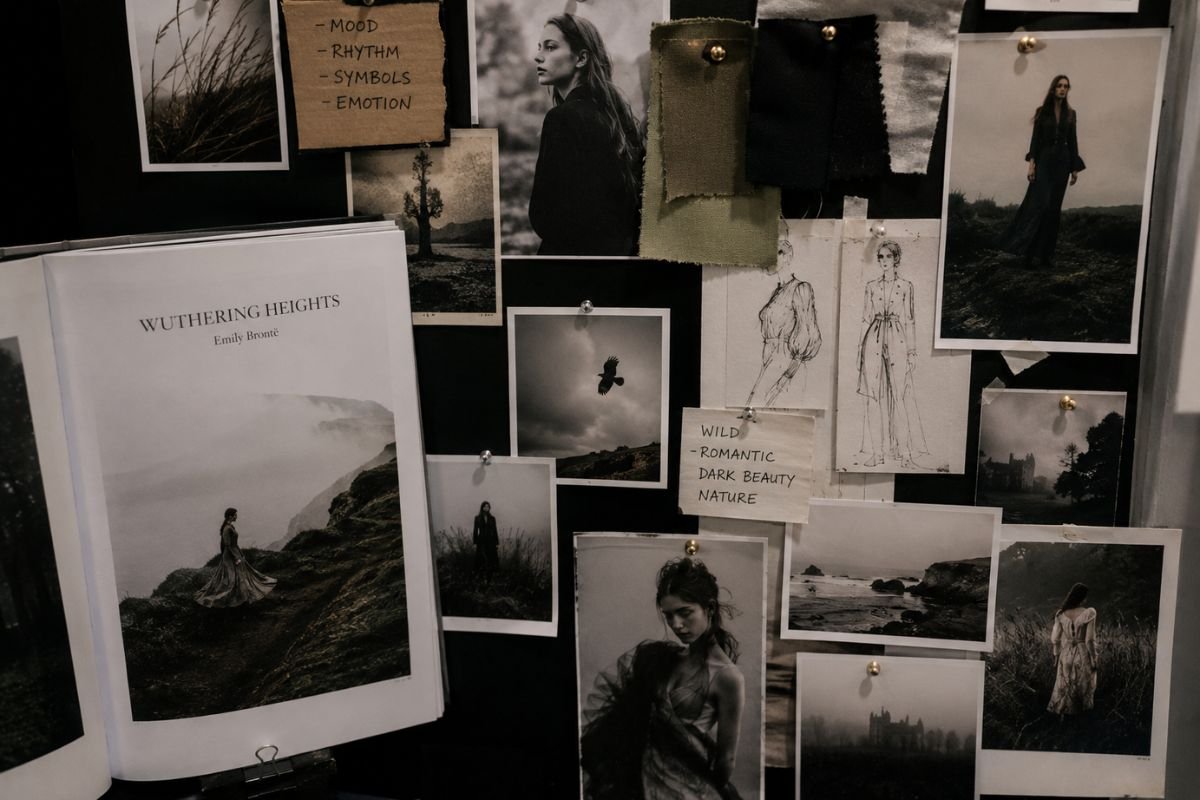
Fashion photographers and creative directors often draw inspiration from literature alongside cinema, painting, architecture, and music.
However, books rarely illustrate a specific story from a novel. Instead, they inspire moods, rhythms, symbols, and emotions that influence lighting, composition, styling, and location.
The final image reflects the visual conversation inspired by the book rather than its literary plot.
Why Books Continue to Inspire Editorial Photography
Fashion editorials are designed to make viewers feel something before they begin analyzing what they see. Books are especially effective because they introduce layers of meaning that clothing alone cannot communicate.
They help create believable characters, richer environments, and stronger visual narratives. Rather than becoming the focal point of the image, they enhance it through subtle details.
As editorial fashion photography continues expanding across digital media, books remain one of the most effective tools for transforming beautiful fashion images into memorable visual stories.