
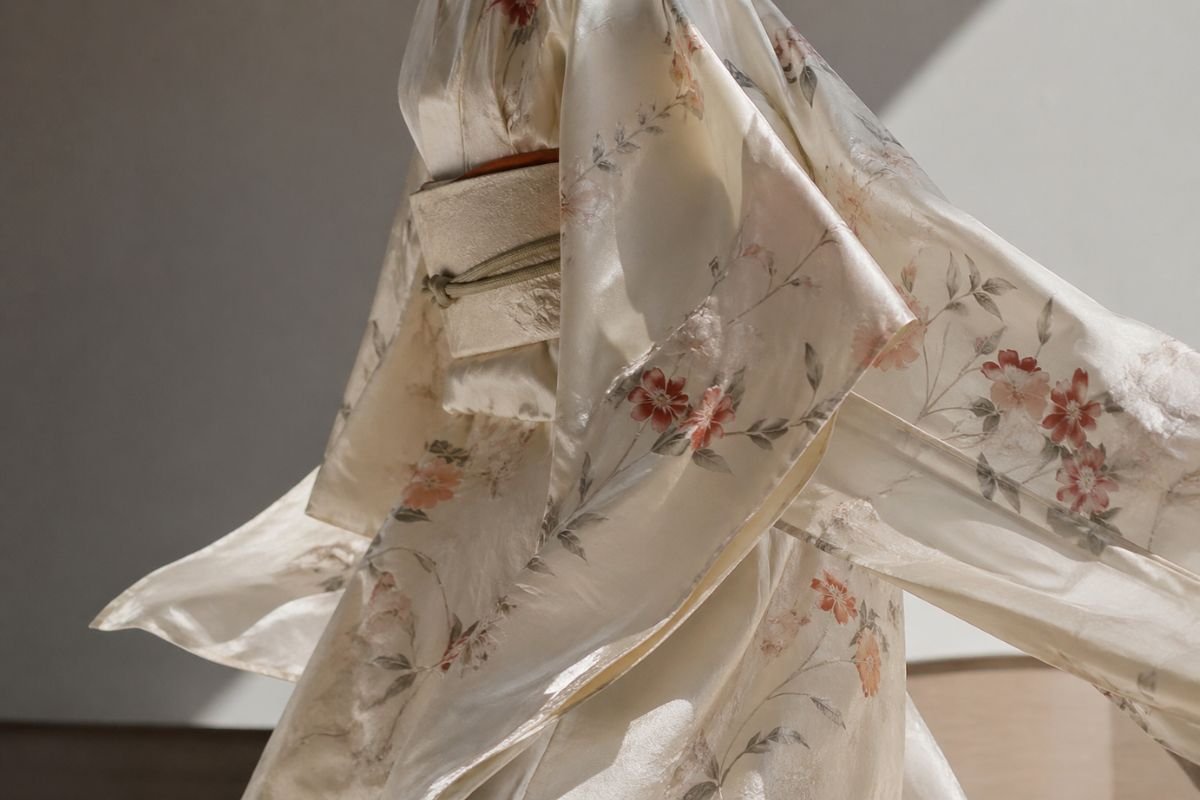
When considering the nature of a kimono fabrics and materials guide, the first thing one should note is that material choice has a major influence on both the performance and the look of the garment. Since kimono is a relatively light dress worn without heavy layering, it needs to move naturally, reflect light appropriately, and remain comfortable for warmer seasons.
View this post on Instagram
Types of Fabrics Used for Kimonos
As far as kimono fabrics are concerned, there are two primary materials used in their creation. One is silk, which allows for a more refined design, and the other is cotton, which is preferred for being softer, lighter, and easier to produce. Both types have distinct features that need to be considered.
View this post on Instagram
Silk for Strength and Stability
First and foremost, kimono fabrics made from silk have clear structural advantages. The material can retain its shape without being too heavy or restrictive. At the same time, silk fibers are dense enough to maintain the overall form of the garment.
From the perspective of a kimono fabrics and materials guide, it is also important to note that silk is easy to dye evenly. In addition, the reflective properties of the fibers give the fabric a distinct quality that does not require additional decoration. However, weight and density may vary depending on the weaving technique.
Cotton for Lightness and Comfort
In comparison, kimono fabrics made from cotton are light, breathable, and flexible. They still provide some structural support, although it is lower than in the case of silk. As a result, garments made from cotton are softer and more suitable for warm weather.
Within a kimono fabrics and materials guide, it is also important to understand that the matte surface of cotton changes how color is perceived. Colors tend to appear softer compared to those on silk.
Fabric Weaving Methods and Their Impact
When discussing kimono fabrics and materials, attention should be given to weaving methods, as they play an important role in defining texture. The techniques used can significantly influence how the fabric behaves. Denser materials tend to show fewer fine details, while looser constructions allow for more variation.
Therefore, a kimono fabrics and materials guide should take into account how weaving affects both appearance and feel. Different structures will behave differently depending on their density.
Impact of Dyeing Processes and Their Features
Dyeing is another key process that affects both the performance and appearance of the garment, contributing to how silhouettes transform shape. While silk tends to retain color with high clarity, variations may still occur depending on the fabric and technique used.
This means that the interaction between dye and material should be considered carefully. Some fabrics allow for more precise color results, while others create softer or less defined effects.
Fabric Weight, Drape, and Motion
The weight of the fabric has a strong influence on how the garment moves. Heavier materials tend to follow more structured movement, while lighter fabrics allow for greater flexibility and responsiveness.
In a kimono fabrics and materials guide, it is essential to address weight and drape, as they directly affect how the garment behaves in motion.
Fabric Consistency in the Construction Process
Another important characteristic is consistency throughout the manufacturing process. All pieces used to construct a kimono should maintain a similar quality to ensure balance and symmetry.
In this context, fabric consistency plays a significant role in the final appearance of the garment.