
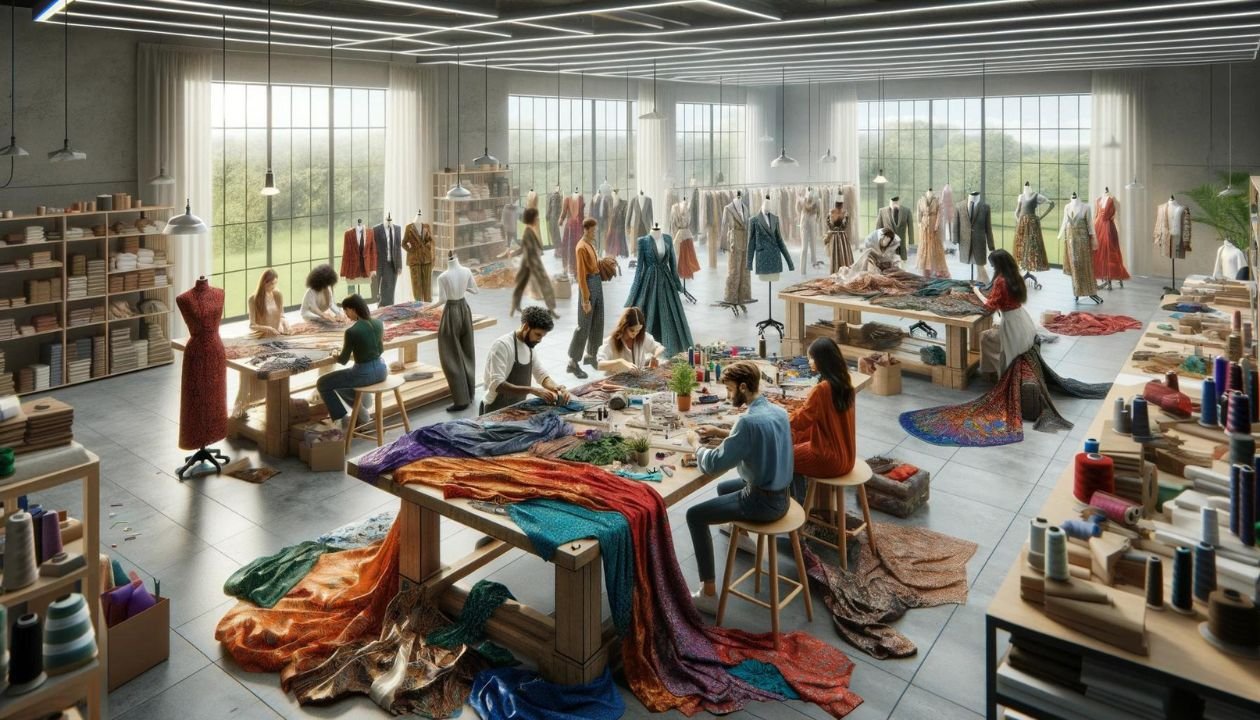
For some fashion designers, the next collection begins with a search for materials that already exist. An embroidered apron tucked away in a Bulgarian household, a box of surplus crystals, or a roll of fabric left over from another collection can become the starting point for an entirely new design.
This approach to sustainable fashion changes the creative process itself. Designers work with the colors, textures, and quantities they discover, allowing the materials to influence what the finished garments will look like.
View this post on Instagram
View this post on Instagram
The results can be wonderfully unpredictable. At Chopova Lowena, traditional Bulgarian textiles meet climbing hardware. Swiss designer Kevin Germanier brings discarded embellishments into the glamorous world of eveningwear, while independent businesses are finding new ways to bring reconstructed clothing into everyday wardrobes.
Chopova Lowena: Giving Bulgarian Folk Dress a New Identity
Few garments capture the personality of Chopova Lowena better than the label’s signature carabiner skirt. Colorful pleated fabrics hang from a chunky leather waistband, attached with metal clips more commonly associated with rock climbing.
The designers behind the British label, Emma Chopova and Laura Lowena, met while studying at Central Saint Martins. Their work brings together Bulgarian folk costumes and references from sportswear, particularly the clothing and equipment associated with climbing in the 1980s.
Some of their fabrics come from traditional embroidered aprons and blankets that once formed part of Bulgarian bridal dowries. Chopova’s mother, Iolanta, helps source these textiles in Bulgaria, where skilled seamstresses turn them into contemporary garments.
The original patterns and embroidery vary from one piece of fabric to another, meaning that individual skirts can have their own combinations of color and decoration. For the wearer, that individuality is part of the attraction.
Kevin Germanier Makes Discarded Materials Sparkle
There is nothing understated about Kevin Germanier’s approach to fashion. The Swiss designer is known for extravagant embellishments, vivid colors, and eveningwear that catches the light from almost every angle.
Germanier has worked with surplus beads and crystals, including unused Swarovski stock, incorporating decorative materials that might otherwise remain forgotten into elaborate fashion creations.
His work challenges the familiar visual association between sustainable clothing and muted colors or simple natural fabrics. Beaded surfaces, shimmering fringes, and sculptural silhouettes are central to his aesthetic.
Working with limited quantities of embellishments also presents an unusual design challenge. A particular color or type of bead may only be available in small amounts, requiring the designer to adapt a pattern or introduce another shade into the finished piece.
RE.STATEMENT Brings Upcycled Fashion to Independent Shoppers
Finding reconstructed clothing once meant discovering individual designers through vintage markets, fashion events, or small independent shops. Hannah M. Le took a different approach when she founded RE.STATEMENT in 2022.
The online marketplace brings together independent designers and small businesses in the United States that turn existing materials into new garments and accessories.
Reclaimed sari fabrics become wrap tops and dresses, old T-shirts are reconstructed into contemporary streetwear, and discarded textiles find new uses in patchwork bags.
Unlike conventional fashion retailers, which often stock identical garments in multiple colors and sizes, RE.STATEMENT specializes in individually produced pieces. The availability of the original materials determines what designers can offer.
That business model also presents practical challenges. A garment that exists in only one size may appeal to numerous shoppers while fitting very few of them.
Designing eco-friendly clothing for curvy figures is therefore an important consideration as independent fashion businesses explore how to make reconstructed garments available to customers with different body shapes.
Stella McCartney and the Challenge of Sustainable Luxury
For larger fashion houses looking to adopt sustainable processes, Stella McCartney offers a different case study.
Since establishing her label in 2001, McCartney has avoided animal leather and fur in her collections. Her approach has expanded to include organic cotton, recycled materials, and the exploration of alternatives to conventional leather.
Unlike a designer working with a small collection of vintage textiles, an established luxury house needs materials that can be sourced consistently and manufactured across multiple product categories.
A handbag material, for instance, must withstand repeated handling while maintaining its shape, flexibility, and appearance. Developing an alternative involves more than simply finding a substitute that resembles leather.
In 2024, the brand also began participating in CircularItalie, an initiative that connects businesses with specialists capable of finding further uses for unsold products and leftover production materials.
It addresses a less visible aspect of the fashion business: what happens to materials and merchandise that never reach a customer’s wardrobe.
Can Fashion Change Without Producing More Clothes?
Clothing rental offers another approach to the industry’s environmental challenges. Instead of changing how garments are made, rental businesses concentrate on how often an existing piece can be used.
Services such as Haverdash have explored subscription models that give customers access to rotating wardrobes without requiring them to purchase every garment.
The environmental benefits, however, depend on how the service operates. Repeated shipping, packaging, professional cleaning, and the durability of the clothing all influence its overall impact.
Renting an occasion dress that would otherwise be purchased and worn only once presents a different situation from regularly shipping casual garments that a customer might already own.
Beyond Upcycling: Rethinking the Materials of Fashion
Some discarded textiles cannot easily be reconstructed into new clothing. Worn fabrics, damaged fibers, and garments containing several different materials present challenges that require solutions beyond conventional upcycling.
Worn Again Technologies has worked on processes intended to separate polyester and cotton from blended textile waste, allowing recovered materials to become potential resources for further textile production.
Elsewhere, research into biotechnology is exploring how biological processes can contribute to the future of sustainable fashion, including the development of alternative fibers and dyes.
These technologies face challenges involving manufacturing costs, commercial scale, and material performance. A promising laboratory result does not necessarily mean a material is ready for widespread fashion production.
For designers, the possibility of eventually working with fibers recovered from worn clothing opens up a different creative opportunity: using existing textiles without being limited by the original garment’s shape, pattern, or condition.